
Hiring & Status Checks– category –
-

The 17 Job Categories of Specified Skilled Worker in Japan’s Industrial Product Manufacturing Field|Permitted Work, Exam Categories, and Working Across Categories
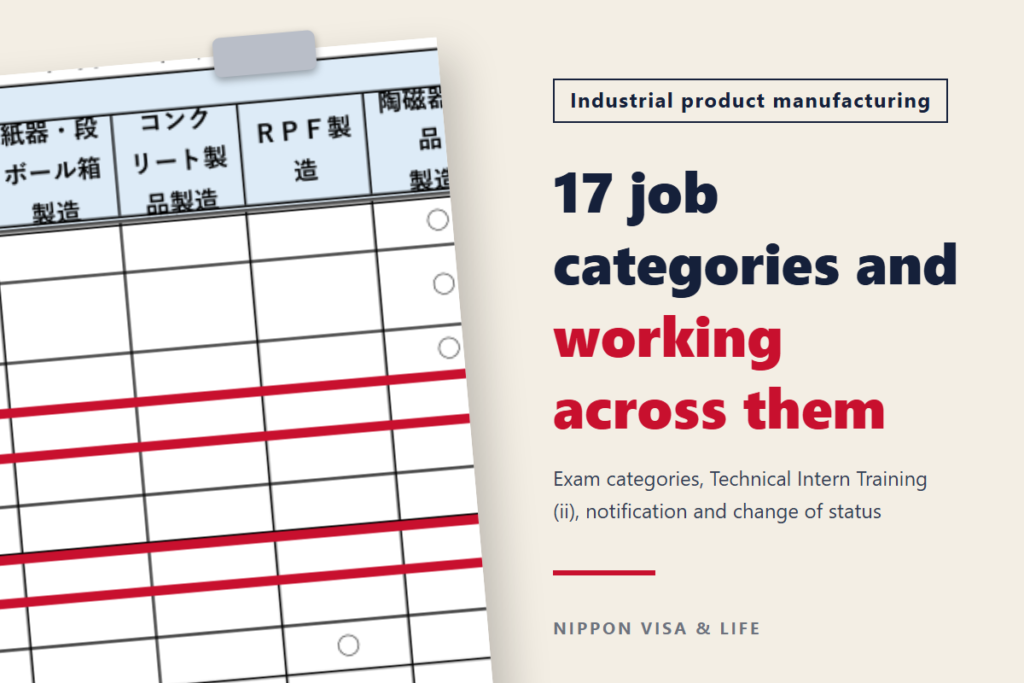
A table-based guide to the 17 job categories for (i) and 3 for (ii) of Specified Skilled Worker in the industrial product manufacturing field in Japan: the scope of work in each category, the exam categories, and the Technical Intern Training (ii) occupations exempt from the exams. Based on the operational guidelines and JAIM's FAQ, we explain why those who entered through the exams and those who moved from technical intern training can work in different categories, and which exams and notifications are needed to have a worker do another skill in the same category, a different category, or work in a different field. -
Specified Skilled Worker in Food and Beverage Manufacturing in Japan|How to Judge Eligible Workplaces and the Boundary with Food Service (Supermarkets and Bento)
Whether you can hire a foreign national in Japan in the Specified Skilled Worker "food and beverage manufacturing" field is decided not by the company but by the workplace where they work. Based on the operational guidelines and the FAQ of the Ministry of Agriculture, Forestry and Fisheries, this article covers how workplaces are counted, judging by the activity with the largest sales, the 10 industries in the public notice, judgments by business type (supermarkets, meat, fresh fish, cut vegetables, contract manufacturing, and more), the boundary with the food service field for central kitchens, bento, and institutional meals, and the documents requested in the council's review. -
How to Join JAC (Japan Association for Construction Human Resources) in Japan | Supporting Members vs. Full-Member Organizations, Fees, and Membership Certificates
In Japan, companies that accept foreign nationals as Specified Skilled Workers in the construction field must belong to JAC (Japan Association for Construction Human Resources), directly or indirectly. Based on JAC, MLIT, and the operational guidelines, this article covers the difference between joining through a full-member organization and becoming a supporting member, the supporting member annual fee of 240,000 yen and how to count the acceptance fee (12,500 yen per month for each (i) worker), the membership review deadline and how to receive the membership certificate, points where the Acceptance Plan application often stalls, and the order for changing organizations or withdrawing. -
Transitional Measures for Employment for Skill Development in Japan: What Happens to Technical Intern Trainees from April 2027? Stage (iii), New Entries, and Acceptance Quotas
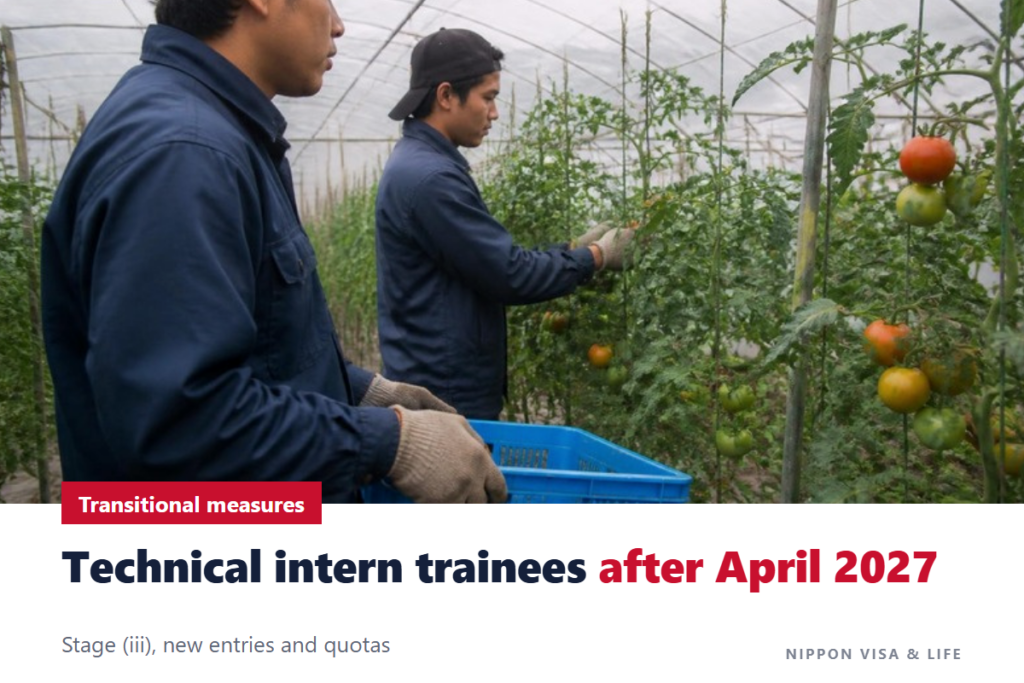
When the Employment for Skill Development system starts in Japan on April 1, 2027, Technical Intern Training will not end all at once. Based on the Immigration Services Agency's materials and Q&A on the transitional measures, this guide sets out the 3 cases in which Technical Intern Training can continue after the start date, how to count "1 year or more in stage (ii) as of the start date" to move on to stage (iii), the deadlines for new acceptance just before the start date (applications by March 31, entry by June 30), why trainees cannot switch to Employment for Skill Development, and how acceptance quotas and supervising organizations are treated. -
What Are the Affiliated Organization Categories for Specified Skilled Workers in Japan? How Categories 1 to 4 Are Decided and Which Documents Can Be Omitted
In Japan, the "Categories 1 to 4" for affiliated organizations of Specified Skilled Workers are mainly about the upper limit of the period of stay. Whether a company can omit its own documents (Table 2) is decided by a separate standard: whether it has already accepted a Specified Skilled Worker in the same fiscal year, or whether it is an organization with a certain track record (Table 2-1). Based on Immigration Services Agency materials, this guide explains how to check the category, which documents can be omitted for each type of application, and points to note. -
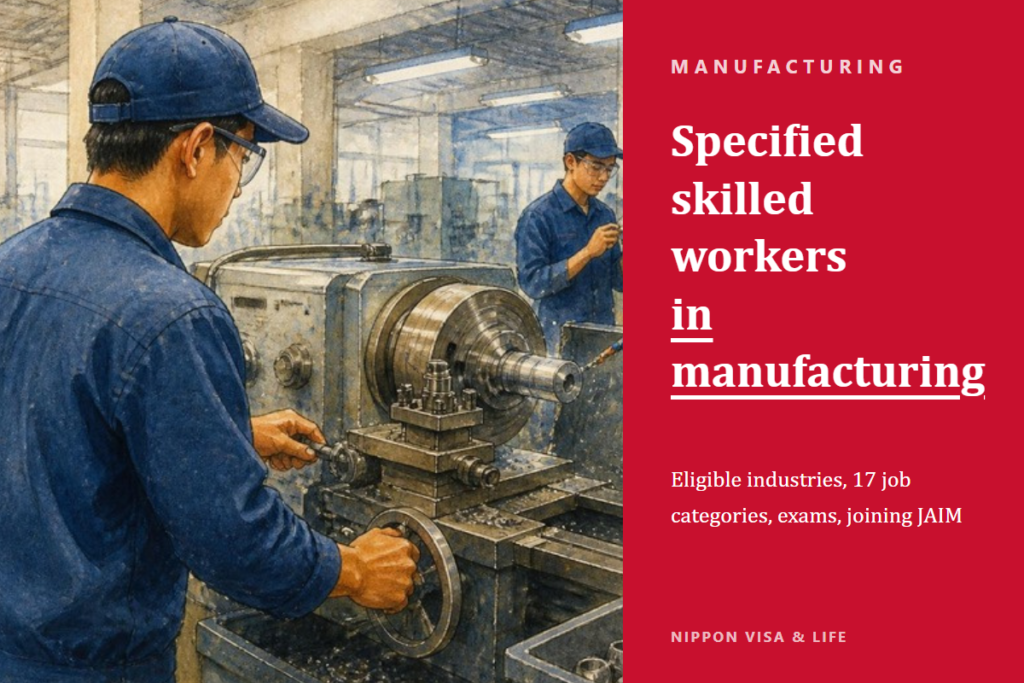
Guide to Accepting Specified Skilled Workers in the Industrial Product Manufacturing Field in Japan|Eligible Industry Classifications, 17 Job Categories, Exams, and Joining JAIM
The overall picture of hiring foreign nationals on Specified Skilled Worker status at factories in Japan for metal processing, machinery, electrical and electronic equipment, plastics, plating, paper containers, printing, textiles, furniture, rubber, and more. Based on the operational guidelines (partially revised June 25, Reiwa 8) and guidance from the Ministry of Economy, Trade and Industry (METI) and JAIM, this guide covers eligible industry classifications (76 classifications for (i)), the 17 job categories, exams and Japanese language, joining JAIM (an average of 2 to 3 months until listed in the register; annual fee 60,000 yen to 83,000 yen), the field-specific documents for immigration, and the two routes to Specified Skilled Worker (ii). -
Guide to Accepting Specified Skilled Workers in the Food and Beverage Manufacturing Field in Japan|Eligible Workplaces, Exams, the Council, and the Application Flow
The overall picture of hiring foreign nationals on Specified Skilled Worker status at food factories, supermarket production sections, and bakeries or confectioners that make and sell their own products. Based on the operational guidelines (partially revised August 28, 2026) and guidance from the Ministry of Agriculture, Forestry and Fisheries, this guide covers eligible workplaces (Japan Standard Industrial Classification), permitted work, the skills and Japanese language exams, joining the Food Industry Specified Skilled Worker Council (about 2 to 3 months), the field-specific documents for immigration, Specified Skilled Worker (ii), and the separation of the fishery processing industry from April 2027. -
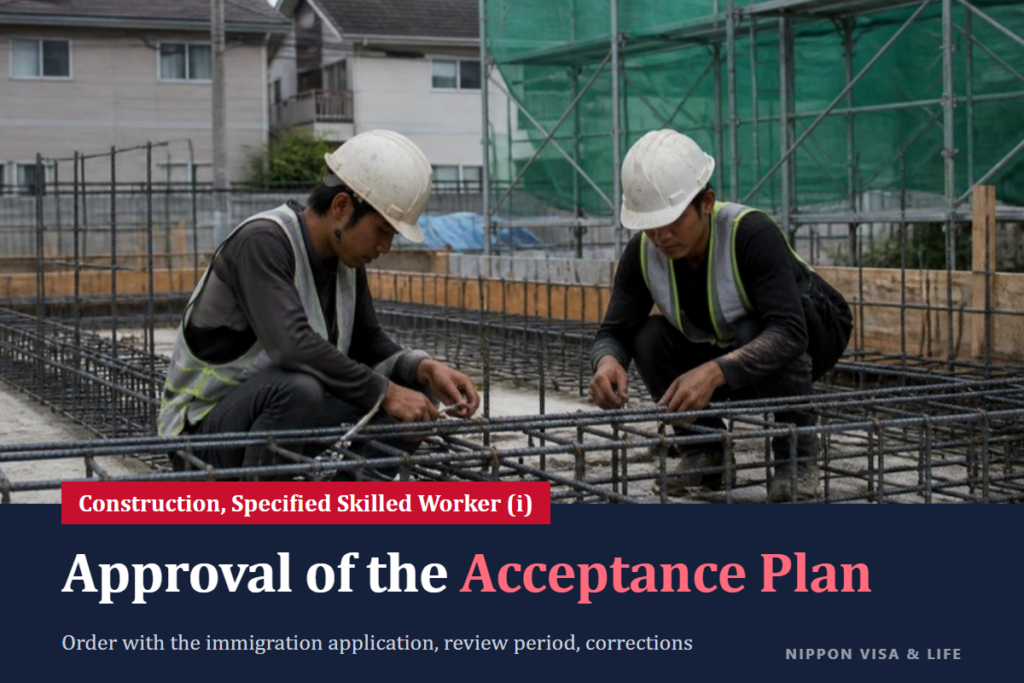
What Is the Construction Specified Skilled Worker Acceptance Plan in Japan? Approval Process, Required Documents, and Review Period Based on MLIT’s Guide
To accept foreign nationals as Specified Skilled Worker (i) in the construction field, you need approval of the Construction Specified Skilled Worker Acceptance Plan from the Minister of Land, Infrastructure, Transport and Tourism, separately from the immigration application. Based on MLIT's guide and the operational guidelines, this article covers the requirements for approval, what to submit to MLIT and to immigration and when, the 16 attachments for MLIT, the review period (about 1.5 to 2 months, excluding correction periods) and when to apply, common reasons for corrections, and the reports, training, and change applications after approval. -
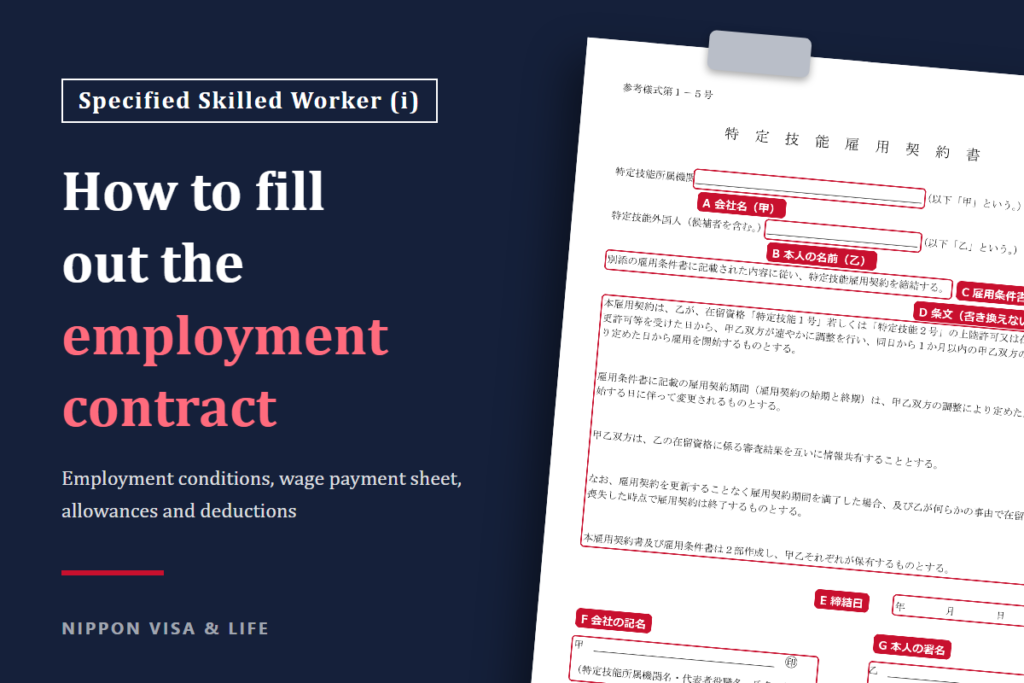
Employment Contract, Employment Conditions, and Wage Payment for Japan’s Specified Skilled Worker (i) | Filled-in Examples and Points to Note on Allowances and Deductions
How to fill out the Specified Skilled Worker employment contract (Reference Form No. 1-5), the employment conditions (No. 1-6), and the wage payment sheet (Attachment 1) submitted with a Specified Skilled Worker (i) application, following the Immigration Services Agency's forms and filled-in examples. Covers the worker's language and signature, points to note for each field of the employment conditions, how to write allowances, fixed overtime pay, and deductions (meals, housing, utilities), reviewing that the contents of the employment conditions and the wage payment sheet are consistent, and the fields that require a notification if changed later. -
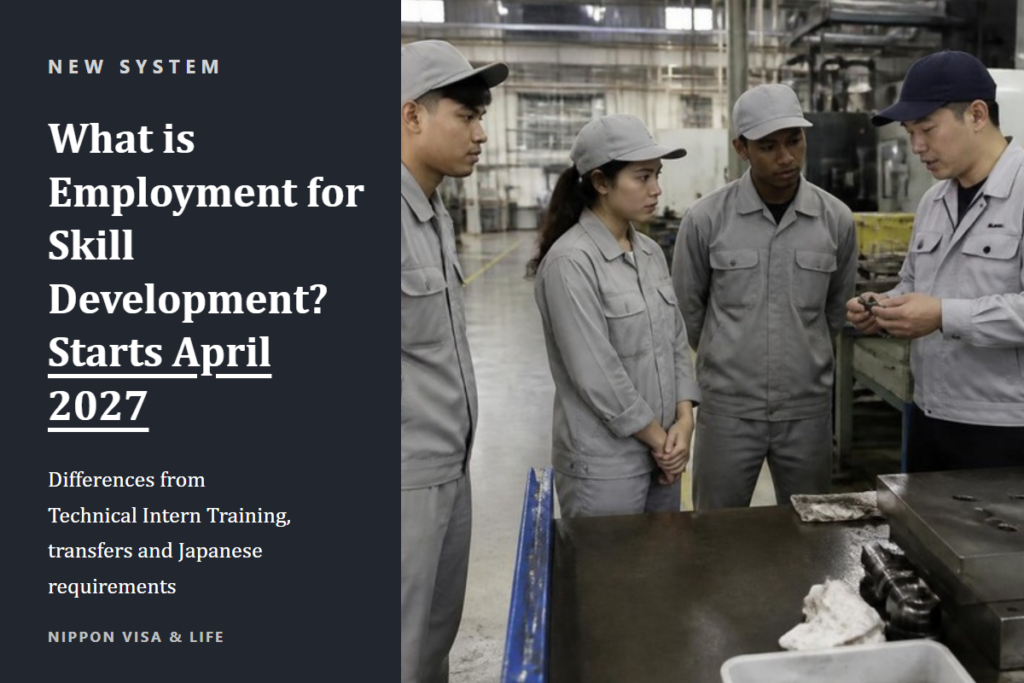
What is the Employment for Skill Development system? A full guide to the differences from Technical Intern Training, transfers, and Japanese requirements [Starts April 2027]
An explanation, based on materials published by the Immigration Services Agency, of the Employment for Skill Development system that replaces Technical Intern Training on April 1, 2027 (April 1, Reiwa 9). Tables summarize the differences from Technical Intern Training and Specified Skilled Worker, the 17 fields and expected numbers of workers, the rules for transfers, the Japanese language targets, the transitional measures for current technical intern trainees, and what companies and supervising organizations should prepare before the start.


12