
Residence Procedures– category –
-

Changing to a Different Field on Specified Skilled Worker Status in Japan|Passing the Tests, Job Categories, and the Change of Status Process
To move to work in a different field on Specified Skilled Worker status in Japan, you need Permission to change status of residence, and you cannot work at the new company until permission is granted. Based on the Immigration Services Agency's materials, this guide explains the skills test and Japanese level of the new field (N4, nursing care, and N3 categories), the scope of the Technical Intern Training (ii) exemption, omitting certificates you have already submitted, points to note for food service, construction, and other fields, and how the 5-year total is counted. -
[Our Actual Request Letter Published] How to Ask for a Specific Issue Date (Permission Date) When Receiving Your Residence Card by Mail in Japan
If you apply online in Japan and receive your residence card by mail, the permission takes effect when the card arrives. For cases where you want to avoid the card arriving before your last day at your current company or the scheduled completion date of Technical Intern Training, a gyoseishoshi lawyer office publishes, with details hidden, the text of the "Request Regarding the Residence Card Issue Date" it actually sent, and explains the intent behind the wording and points to note. -
What Is Designated Activities (Preparation for Transition to Specified Skilled Worker (i)) in Japan? Eligibility, Requirements, Application Process, Use When Changing Jobs, and Points to Note
If your documents for Specified Skilled Worker (i) will not be ready before your period of stay expires in Japan, there is a Designated Activities status (6 months, work permitted) that lets you prepare while working at the company you plan to work for. Based on Immigration Services Agency materials, this article covers who can and cannot use it (passing the tests is a prerequisite, the 4 years and 6 months total limit, the food service industry), the 7 requirements, how to fill in the explanatory statement, the application process, how to use it when changing jobs, the one-time-only extension, and the fee (18,000 yen at the counter). -
Changing Jobs on Specified Skilled Worker Status in Japan: What the Worker, the New Company, and the Former Company Must Do, and in What Order
You can change jobs on Specified Skilled Worker status, but each time you change companies you need Permission to change status of residence, and you cannot work at the new company until permission is granted. This guide uses a table and a diagram to show what the worker, the new company (and its registered support organization), and the former company each do, and in what order. Based on Immigration Services Agency materials, it also explains how to check whether you can change jobs, when notifications are and are not required, and the Designated Activities options if you lose your job. -
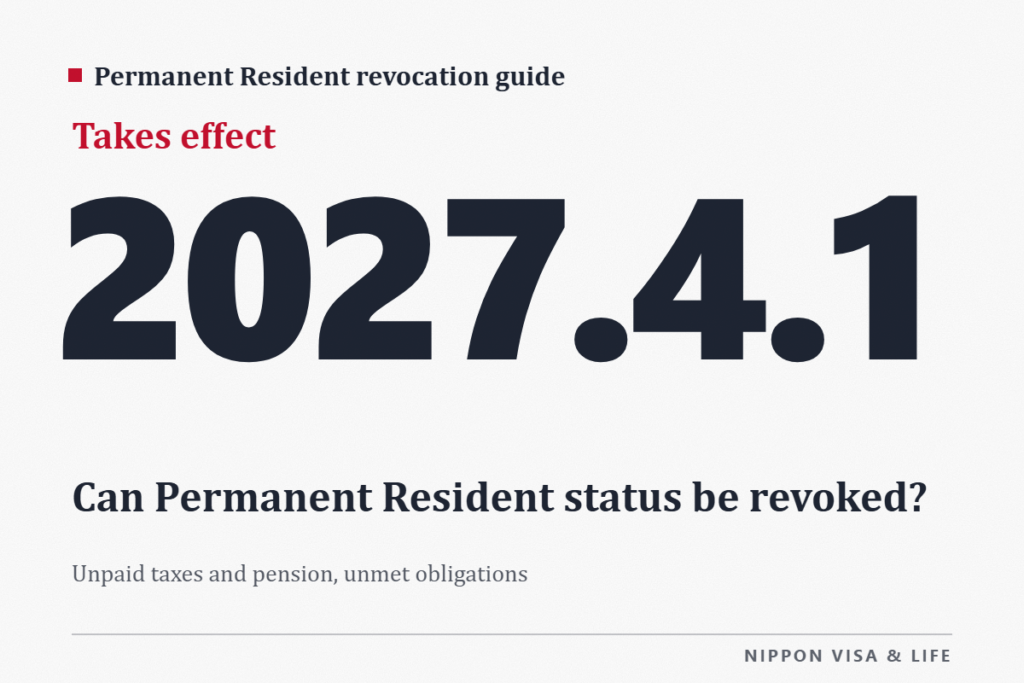
Can Permanent Resident status in Japan be revoked? Unpaid taxes and pension, failure to meet obligations, and crimes as grounds for revocation explained
From April 1, 2027, new grounds are added on which Permanent Resident status can be revoked: not complying with obligations under the Immigration Control Act, intentionally not paying taxes or social insurance premiums, and being sentenced to imprisonment for certain crimes. This article sets out the examples of cases that do and do not apply given in the Immigration Services Agency's guidelines (established October 1, 2026), the change to Long-Term Resident or another status by official authority, the effect on family members, and how to deal with arrears you have now. -
Changing jobs in Japan on Specified Skilled Worker status: the change of status process, processing time, and can you work while your application is pending?
When a Specified Skilled Worker changes companies, a notification alone is not enough: an Application for Permission to change status of residence is required. You cannot work at the new company until permission is granted. Based on Immigration Services Agency materials, this article covers which job changes within job categories are allowed, the timeline from leaving your job to joining the new company, the processing times published by the agency, the notifications required from the former and new companies, and the fees from October 2026. -
What changes with the revised Guidelines for Permission for permanent residence? Income level, Japanese B1, and when the new rules apply, compared old vs. new [October 2026]
An explanation of the Guidelines for Permission for permanent residence revised on October 1, 2026 (Reiwa 8), compared with the previous version. A table summarizes the changes, including the household income level, pensions, Japanese at a B1-equivalent level, and the special provision for spouses (5 years of marriage and 3 years of residence), as well as which approach applies depending on your application date. No specific amount for the income level has been published. -
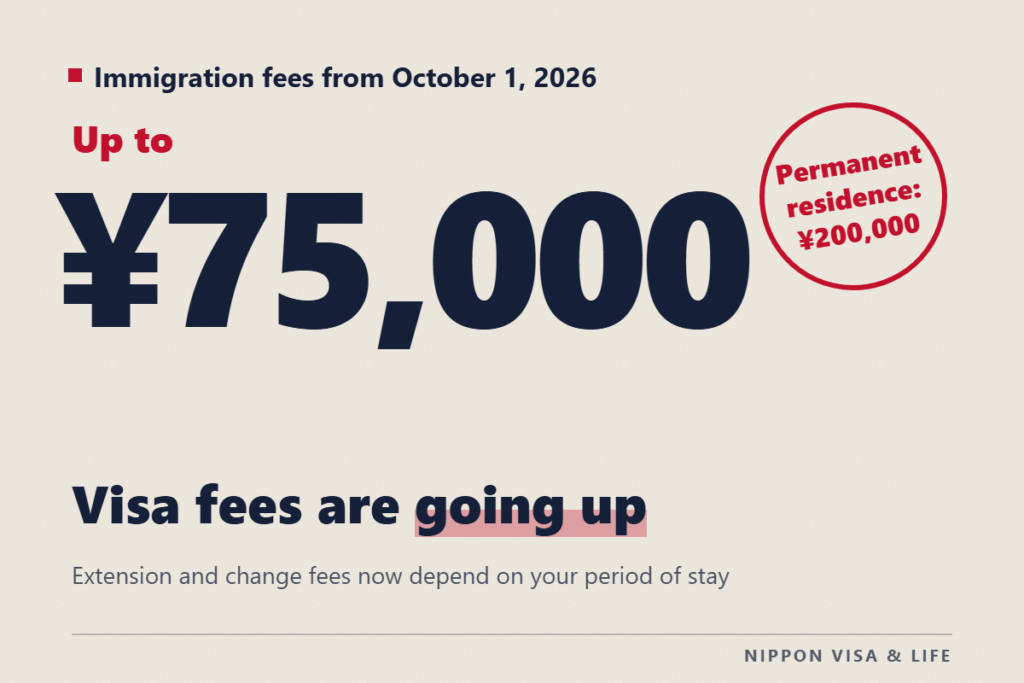
[From October 2026] Japan visa extension and change fees rise to up to 75,000 yen | New fee table and how to pay
From October 1, 2026, the fees for changing your status of residence, extending your period of stay, and permanent residence have changed. Here are the new fees by permitted period, the difference for online applications, when and how to pay, and the conditions for a fee reduction. -
How is the period of stay for Specified Skilled Worker (i) in Japan decided? Limits by company category, and fees that change with a one-month difference
The period of stay granted for Specified Skilled Worker (i) depends on the company's category, the length of the employment contract, and the remaining total period. A gyoseishoshi lawyer explains the limits by category, cases of 11 months or 4 months, and the link to the fees from October 2026. -
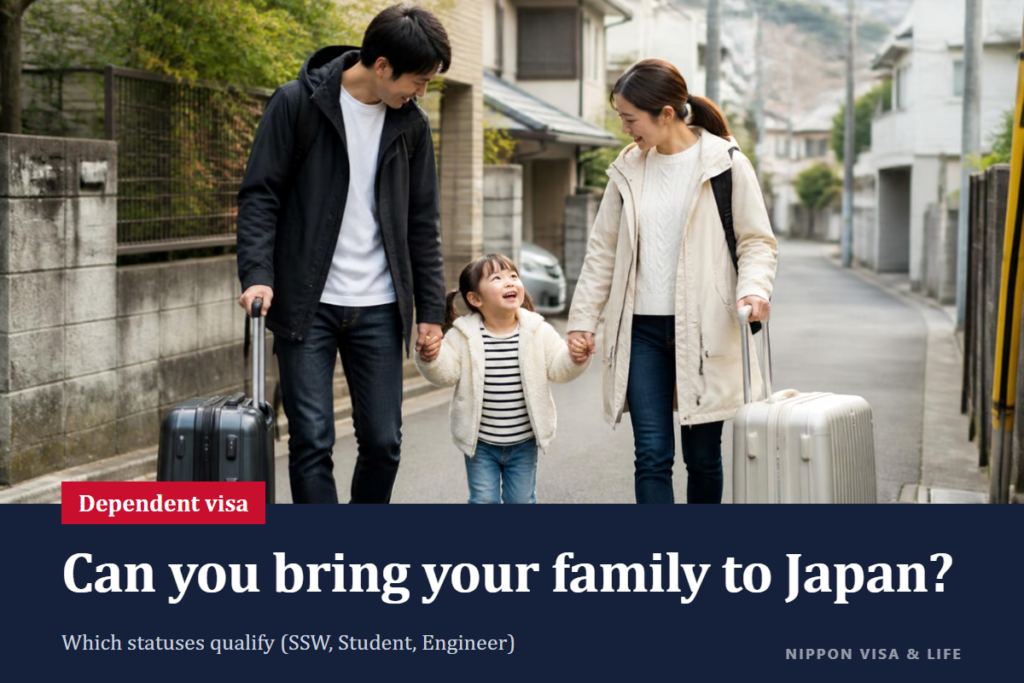
Which statuses of residence can bring family to Japan on a Dependent visa? Whether Specified Skilled Worker, Student, and Engineer/Specialist in Humanities/International Services qualify, and the conditions
A quick-reference guide to which statuses of residence let you bring your spouse and children to Japan on a Dependent visa. Engineer/Specialist in Humanities/International Services and Specified Skilled Worker (ii) qualify, while Specified Skilled Worker (i), Technical Intern Training, Employment for Skill Development, and Japanese language school students in principle do not. Covers the support and income conditions (no official income threshold has been published), required documents, typical processing times, working up to 28 hours a week, and children's options after high school.

12