安藤祐樹– Author –

-

Guide to Accepting Specified Skilled Workers in the Food and Beverage Manufacturing Field in Japan|Eligible Workplaces, Exams, the Council, and the Application Flow
The overall picture of hiring foreign nationals on Specified Skilled Worker status at food factories, supermarket production sections, and bakeries or confectioners that make and sell their own products. Based on the operational guidelines (partially revised August 28, 2026) and guidance from the Ministry of Agriculture, Forestry and Fisheries, this guide covers eligible workplaces (Japan Standard Industrial Classification), permitted work, the skills and Japanese language exams, joining the Food Industry Specified Skilled Worker Council (about 2 to 3 months), the field-specific documents for immigration, Specified Skilled Worker (ii), and the separation of the fishery processing industry from April 2027. -
What Is the Nursing Care Specified Skills Evaluation Test (Skills and Japanese)? How to Apply, Schedule, Fees, Passing Criteria, and Procedures After Passing
Based on the guidance of the Ministry of Health, Labour and Welfare and Prometric, this article explains the Nursing Care Specified Skills Evaluation Test (Skills and Japanese; formerly the Nursing Care Skills Evaluation Test and the Nursing Care Japanese Language Evaluation Test) that you take to work in the "nursing care" field of Specified Skilled Worker: what the tests cover, who can take them, how to apply with Prometric (creating an ID, booking, and payment), what to bring on the test day, the score report, the 45-day rule if you fail, the latest pass rates by country, and the order of steps from passing to starting work. -
What Is the Construction Specified Skilled Worker Acceptance Plan in Japan? Approval Process, Required Documents, and Review Period Based on MLIT’s Guide
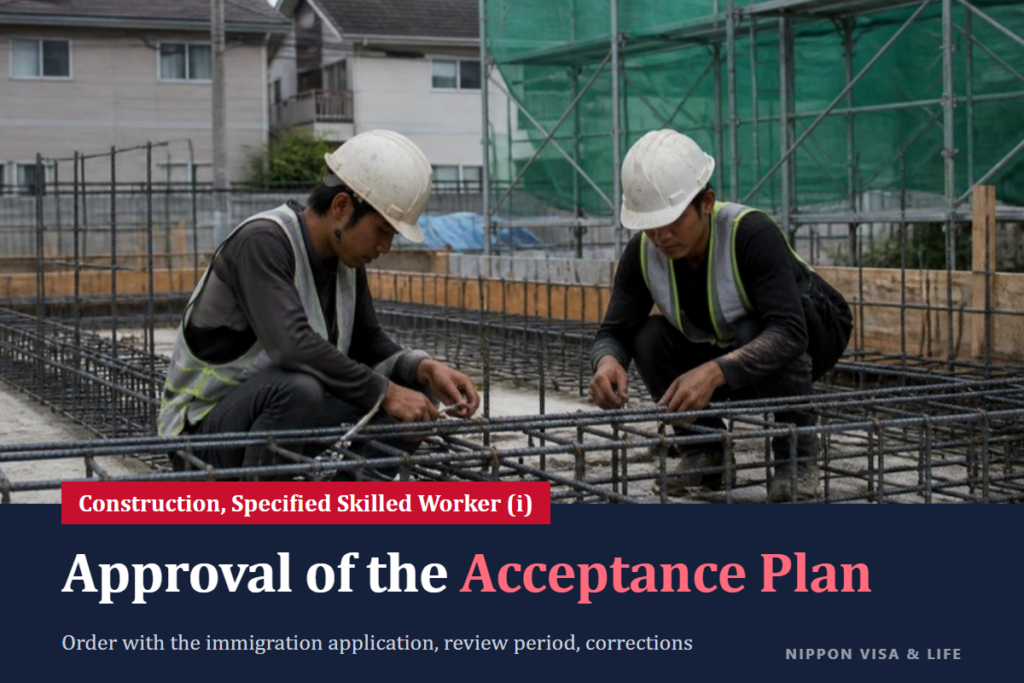
To accept foreign nationals as Specified Skilled Worker (i) in the construction field, you need approval of the Construction Specified Skilled Worker Acceptance Plan from the Minister of Land, Infrastructure, Transport and Tourism, separately from the immigration application. Based on MLIT's guide and the operational guidelines, this article covers the requirements for approval, what to submit to MLIT and to immigration and when, the 16 attachments for MLIT, the review period (about 1.5 to 2 months, excluding correction periods) and when to apply, common reasons for corrections, and the reports, training, and change applications after approval. -
How to Fill Out the Written Pledge and Facility Outline for Specified Skilled Worker “Nursing Care” in Japan | Also the Council Certificate and Test Certificates
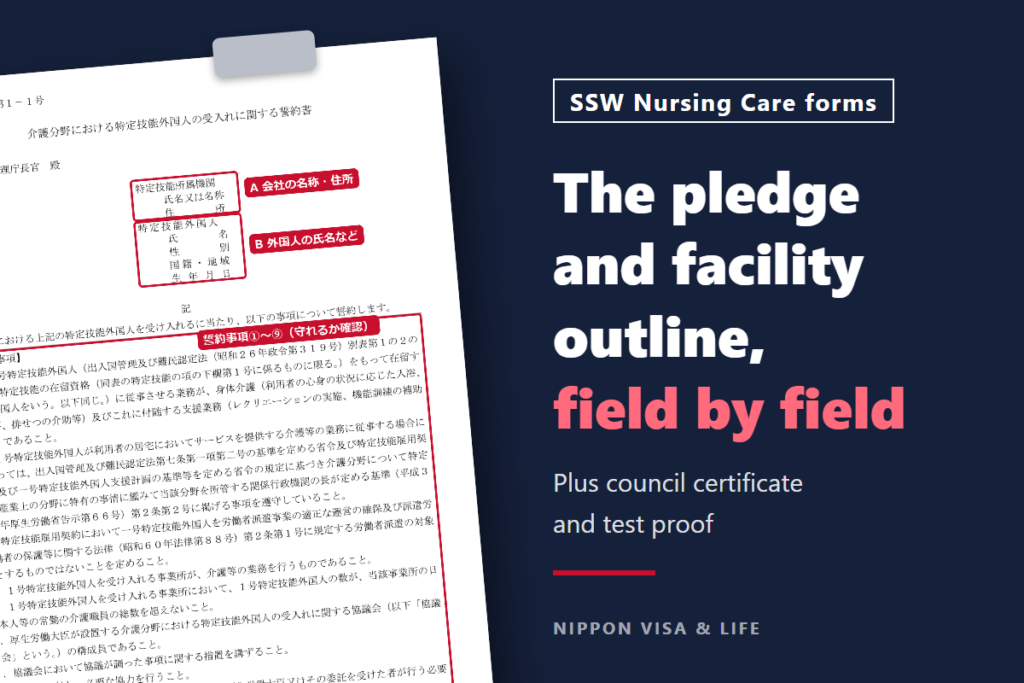
A field-by-field guide to the documents only for the nursing care field (Table 3) in Specified Skilled Worker "Nursing Care" applications. It covers the entry fields and nine pledges of the written pledge (Field Reference Form No. 1-1), how to count nursing care staff in the facility outline (No. 1-2), what to check before submitting the council certificate, the skills and Japanese-language proof for each background, the evaluation report, and the documents to submit when you cannot get one. -
Employment Contract, Employment Conditions, and Wage Payment for Japan’s Specified Skilled Worker (i) | Filled-in Examples and Points to Note on Allowances and Deductions
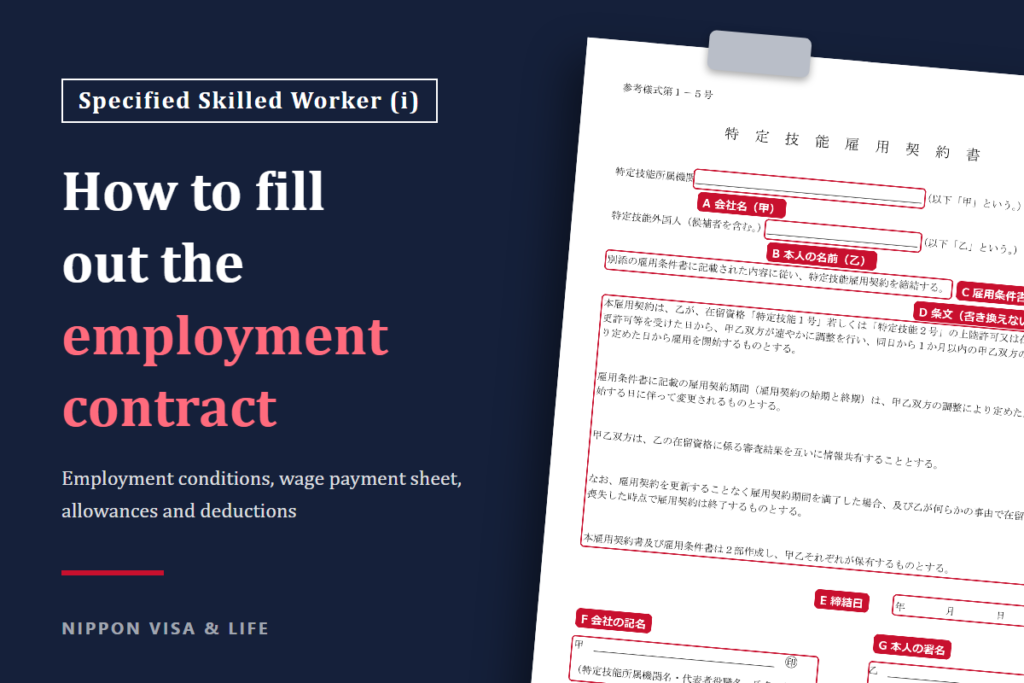
How to fill out the Specified Skilled Worker employment contract (Reference Form No. 1-5), the employment conditions (No. 1-6), and the wage payment sheet (Attachment 1) submitted with a Specified Skilled Worker (i) application, following the Immigration Services Agency's forms and filled-in examples. Covers the worker's language and signature, points to note for each field of the employment conditions, how to write allowances, fixed overtime pay, and deductions (meals, housing, utilities), reviewing that the contents of the employment conditions and the wage payment sheet are consistent, and the fields that require a notification if changed later. -
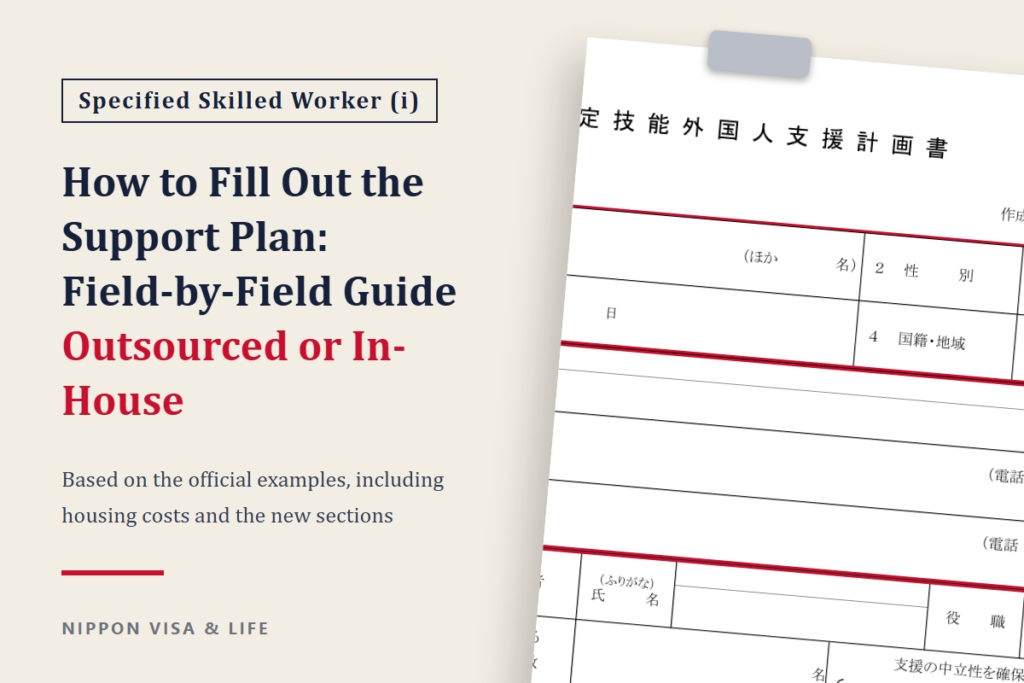
How to Fill Out the Support Plan for Japan’s Specified Skilled Worker (i) | Field-by-Field Guide Using the Official Examples for Full Outsourcing and In-House Support
How to fill out the Support Plan for Specified Skilled Worker (i) (Reference Form No. 1-17), explained field by field using the Immigration Services Agency's examples (full outsourcing and in-house support). Covers which fields differ between full outsourcing and in-house support, reasons for "No" and the outsourcing column, explaining housing costs, online interviews and the signature section, the coexistence measures section added in April 2025, and translation and the foreign national's signature. -
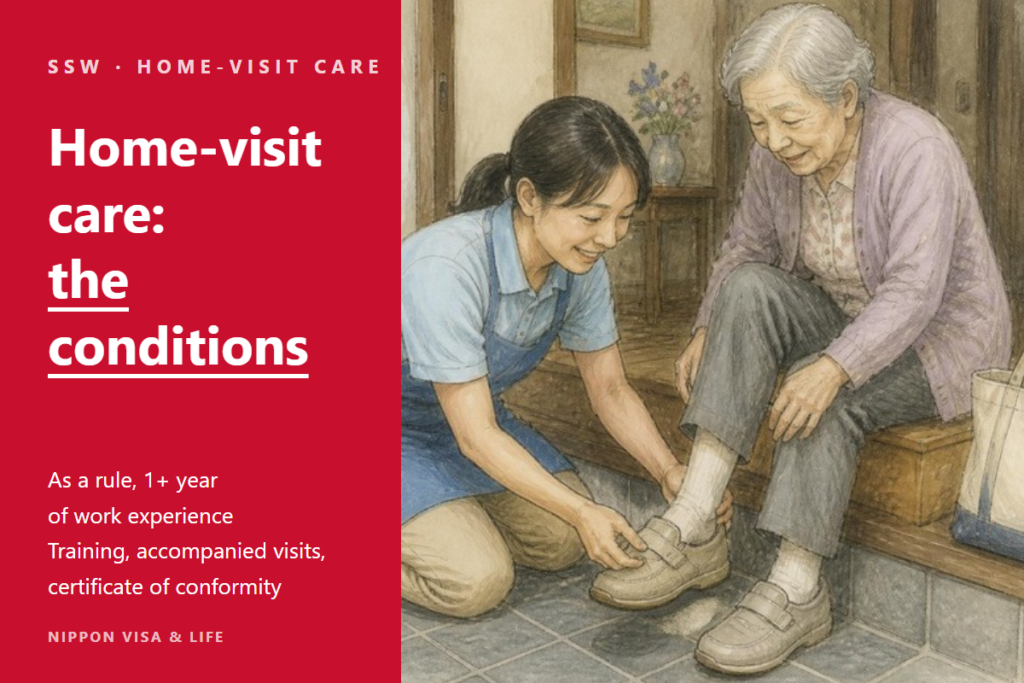
Conditions for Specified Skilled Workers to Work in Home-Visit Care in Japan | 1 Year of Experience, Training, Accompanied Visits, and the Certificate of Conformity
Since April 21, 2025, nursing care workers with Specified Skilled Worker (i) status can work in home-visit services such as home-visit care, under certain conditions. Following the notices and Q&A of the Ministry of Health, Labour and Welfare, this article explains, in the order of the steps: the worker's conditions (completing the initial training course for care workers or similar, and in principle at least 1 year of work experience), the exception for less than 1 year of experience and the length of accompanied visits, the 5 things the facility must observe, explanations to users and families, applying for a certificate of conformity for each foreign national and the documents, periodic reports and itinerant visits, and the procedures for transferring a worker from a facility. -
Required Documents for Japan’s Specified Skilled Worker “Nursing Care” | Attachments and Where to Submit for Certificate of Eligibility, Change, and Extension [2026 Edition]
A list of the documents to submit when applying for Specified Skilled Worker "Nursing Care," organized by application type: Certificate of Eligibility, change of status of residence, and extension of period of stay. Following the document checklists revised on October 1, 2026, this article covers the documents only for the nursing care field (the written pledge, the facility outline, and the council certificate), the documents common to all fields and where to get them, where to submit to the council and to immigration, and the fees and standard processing periods. -
Can Permanent Resident status in Japan be revoked? Unpaid taxes and pension, failure to meet obligations, and crimes as grounds for revocation explained
From April 1, 2027, new grounds are added on which Permanent Resident status can be revoked: not complying with obligations under the Immigration Control Act, intentionally not paying taxes or social insurance premiums, and being sentenced to imprisonment for certain crimes. This article sets out the examples of cases that do and do not apply given in the Immigration Services Agency's guidelines (established October 1, 2026), the change to Long-Term Resident or another status by official authority, the effect on family members, and how to deal with arrears you have now. -
What if a Specified Skilled Worker notification in Japan is past its deadline? What to do when a periodic or ad hoc notification is late
Even after the deadline for the Specified Skilled Worker periodic notification (by May 31 every year) or an ad hoc notification (within 14 days) has passed, you can still submit it. What matters is to attach a statement of reasons explaining the delay and submit as soon as possible. Based on Immigration Services Agency materials, this article explains the steps to take today, what to do when only some documents are not ready in time, what to do when you notice a mistake after submitting, and the risks of leaving a notification unsubmitted.