安藤祐樹– Author –
-

What is the Employment for Skill Development system? A full guide to the differences from Technical Intern Training, transfers, and Japanese requirements [Starts April 2027]
An explanation, based on materials published by the Immigration Services Agency, of the Employment for Skill Development system that replaces Technical Intern Training on April 1, 2027 (April 1, Reiwa 9). Tables summarize the differences from Technical Intern Training and Specified Skilled Worker, the 17 fields and expected numbers of workers, the rules for transfers, the Japanese language targets, the transitional measures for current technical intern trainees, and what companies and supervising organizations should prepare before the start. -
Changing jobs in Japan on Specified Skilled Worker status: the change of status process, processing time, and can you work while your application is pending?
When a Specified Skilled Worker changes companies, a notification alone is not enough: an Application for Permission to change status of residence is required. You cannot work at the new company until permission is granted. Based on Immigration Services Agency materials, this article covers which job changes within job categories are allowed, the timeline from leaving your job to joining the new company, the processing times published by the agency, the notifications required from the former and new companies, and the fees from October 2026. -
What changes with the revised Guidelines for Permission for permanent residence? Income level, Japanese B1, and when the new rules apply, compared old vs. new [October 2026]
An explanation of the Guidelines for Permission for permanent residence revised on October 1, 2026 (Reiwa 8), compared with the previous version. A table summarizes the changes, including the household income level, pensions, Japanese at a B1-equivalent level, and the special provision for spouses (5 years of marriage and 3 years of residence), as well as which approach applies depending on your application date. No specific amount for the income level has been published. -
Annual Guide to Japan’s Specified Skilled Worker Notifications: Periodic Notification (April–May) and Ad Hoc Notifications (Within 14 Days)
We have organized, along the flow of one year, the notifications that companies employing Specified Skilled Workers submit to immigration. Following materials from the Immigration Services Agency, this article explains the once-a-year periodic notification (every year from April 1 to May 31, covering April to March of the previous year), ad hoc notifications due within 14 days after an event occurs, the "certain criteria" and attached documents, and the differences from notifications by registered support organizations and by the foreign nationals themselves. -
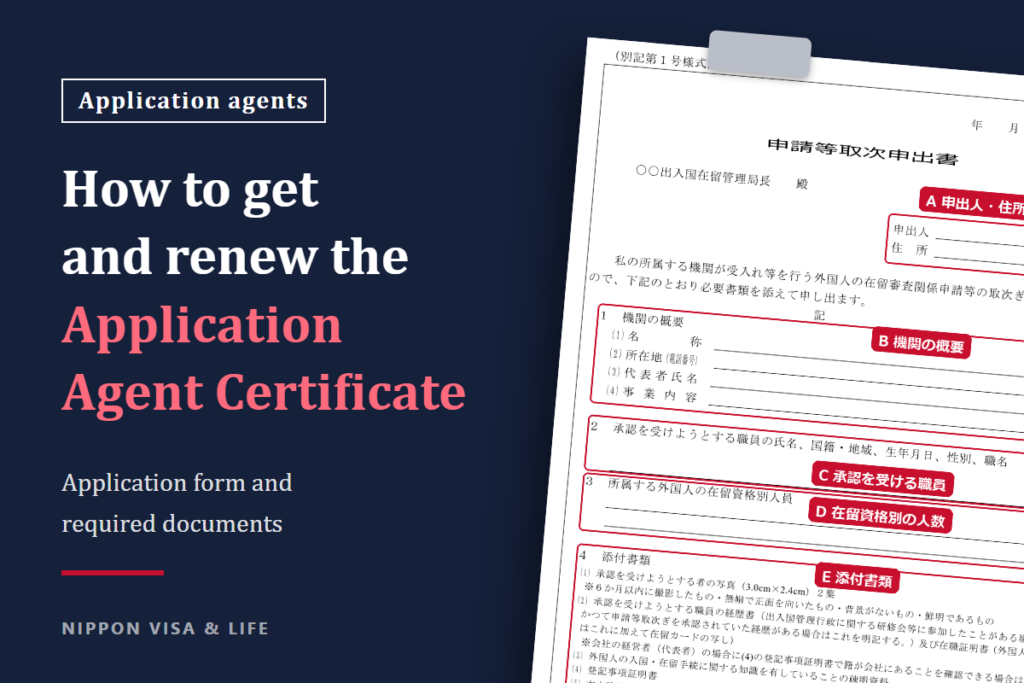
How to get and renew the Application Agent Certificate in Japan | Application form, required documents, and what registered support organizations can submit [Updated for the revised Gyoseishoshi Lawyer Act]
A certified immigration gyoseishoshi lawyer explains how staff of registered support organizations, accepting companies, schools and other organizations get approval as application agents (application form, documents, where to apply, validity, renewal), how to apply to use the online system, what agents can submit, and what to watch out for when submitting for a fee under the revised Gyoseishoshi Lawyer Act. -
How is the period of stay for Specified Skilled Worker (i) in Japan decided? Limits by company category, and fees that change with a one-month difference
The period of stay granted for Specified Skilled Worker (i) depends on the company's category, the length of the employment contract, and the remaining total period. A gyoseishoshi lawyer explains the limits by category, cases of 11 months or 4 months, and the link to the fees from October 2026. -
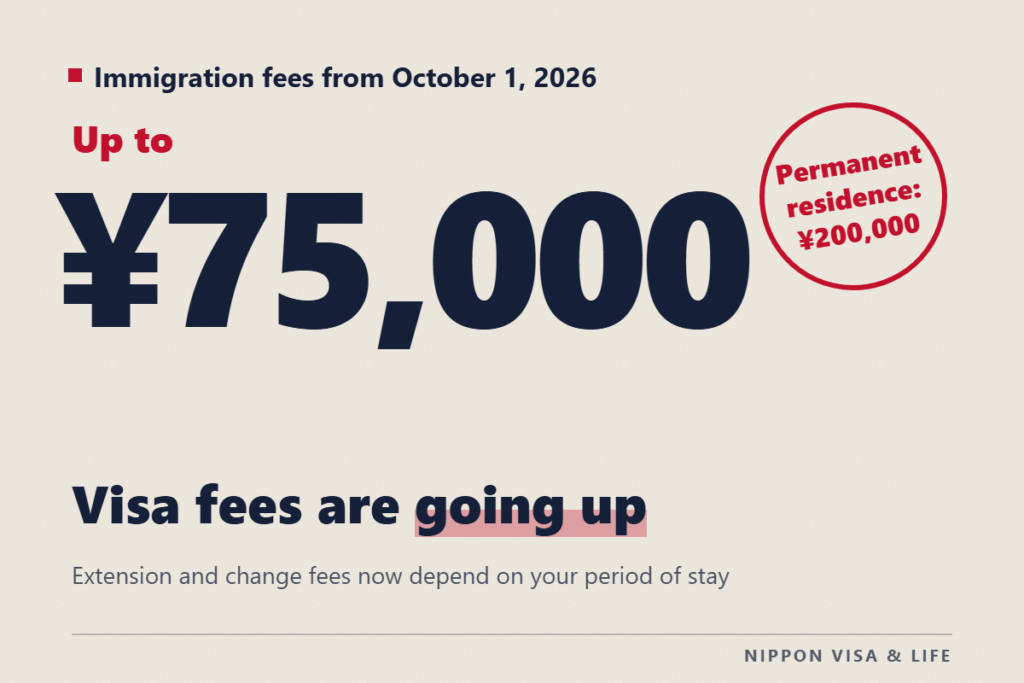
[From October 2026] Japan visa extension and change fees rise to up to 75,000 yen | New fee table and how to pay
From October 1, 2026, the fees for changing your status of residence, extending your period of stay, and permanent residence have changed. Here are the new fees by permitted period, the difference for online applications, when and how to pay, and the conditions for a fee reduction. -
Which statuses of residence can bring family to Japan on a Dependent visa? Whether Specified Skilled Worker, Student, and Engineer/Specialist in Humanities/International Services qualify, and the conditions
A quick-reference guide to which statuses of residence let you bring your spouse and children to Japan on a Dependent visa. Engineer/Specialist in Humanities/International Services and Specified Skilled Worker (ii) qualify, while Specified Skilled Worker (i), Technical Intern Training, Employment for Skill Development, and Japanese language school students in principle do not. Covers the support and income conditions (no official income threshold has been published), required documents, typical processing times, working up to 28 hours a week, and children's options after high school. -
【Live in Japan】Overview of All 29 Types of Visas for Foreigners Staying in Japan: Work Visas, Residence Visas, and More
For foreigners to stay in Japan, they must obtain permission that matches their purpose of stay. This is called a "status of residence," and it is commonly r... -
【Work in Japan】How Closely Must Academic Background and Work Experience Align with Job Duties for the Engineer/Specialist in Humanities/International Services Visa?
For companies hiring foreign nationals under the Engineer/Specialist in Humanities/International Services visa, as well as for foreign nationals seeking empl...