-

Specified Skilled Worker in Food and Beverage Manufacturing in Japan|How to Judge Eligible Workplaces and the Boundary with Food Service (Supermarkets and Bento)
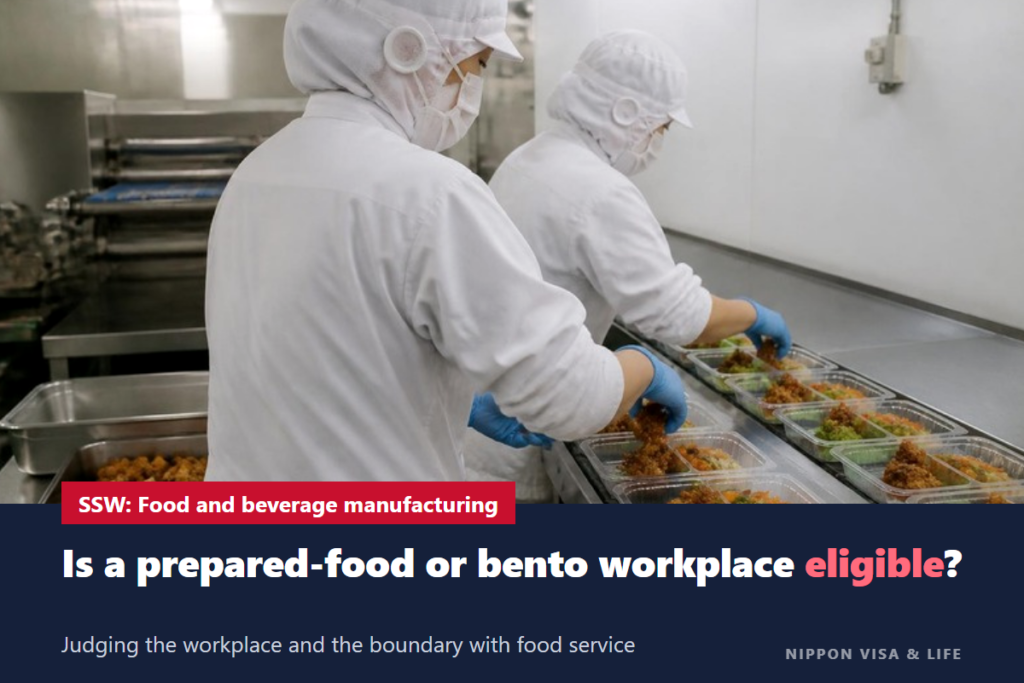
Whether you can hire a foreign national in Japan in the Specified Skilled Worker "food and beverage manufacturing" field is decided not by the company but by the workplace where they work. Based on the operational guidelines and the FAQ of the Ministry of Agriculture, Forestry and Fisheries, this article covers how workplaces are counted, judging by the activity with the largest sales, the 10 industries in the public notice, judgments by business type (supermarkets, meat, fresh fish, cut vegetables, contract manufacturing, and more), the boundary with the food service field for central kitchens, bento, and institutional meals, and the documents requested in the council's review. -
How to Enroll Your Foreign National Child in Elementary or Junior High School in Japan: Procedures, What to Bring and Costs at Public Schools
How to enroll a child of foreign nationality in a public elementary or junior high school in Japan: the steps (moving-in notification, board of education, enrollment permit, school), what to bring, how the grade is decided, tuition, textbooks and school lunch costs, school attendance assistance, and procedures when you move or return home, based on information from the Ministry of Education, Culture, Sports, Science and Technology and the Immigration Services Agency. -
Changing to a Different Field on Specified Skilled Worker Status in Japan|Passing the Tests, Job Categories, and the Change of Status Process
To move to work in a different field on Specified Skilled Worker status in Japan, you need Permission to change status of residence, and you cannot work at the new company until permission is granted. Based on the Immigration Services Agency's materials, this guide explains the skills test and Japanese level of the new field (N4, nursing care, and N3 categories), the scope of the Technical Intern Training (ii) exemption, omitting certificates you have already submitted, points to note for food service, construction, and other fields, and how the 5-year total is counted. -
[Our Actual Request Letter Published] How to Ask for a Specific Issue Date (Permission Date) When Receiving Your Residence Card by Mail in Japan
If you apply online in Japan and receive your residence card by mail, the permission takes effect when the card arrives. For cases where you want to avoid the card arriving before your last day at your current company or the scheduled completion date of Technical Intern Training, a gyoseishoshi lawyer office publishes, with details hidden, the text of the "Request Regarding the Residence Card Issue Date" it actually sent, and explains the intent behind the wording and points to note. -
How to Join JAC (Japan Association for Construction Human Resources) in Japan | Supporting Members vs. Full-Member Organizations, Fees, and Membership Certificates
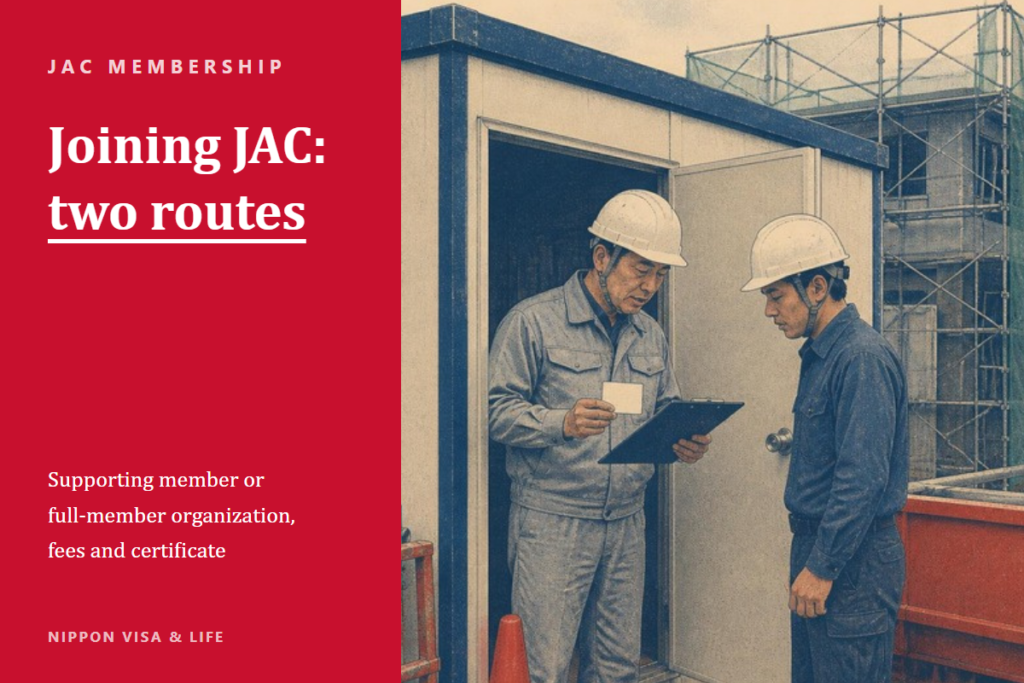
In Japan, companies that accept foreign nationals as Specified Skilled Workers in the construction field must belong to JAC (Japan Association for Construction Human Resources), directly or indirectly. Based on JAC, MLIT, and the operational guidelines, this article covers the difference between joining through a full-member organization and becoming a supporting member, the supporting member annual fee of 240,000 yen and how to count the acceptance fee (12,500 yen per month for each (i) worker), the membership review deadline and how to receive the membership certificate, points where the Acceptance Plan application often stalls, and the order for changing organizations or withdrawing. -
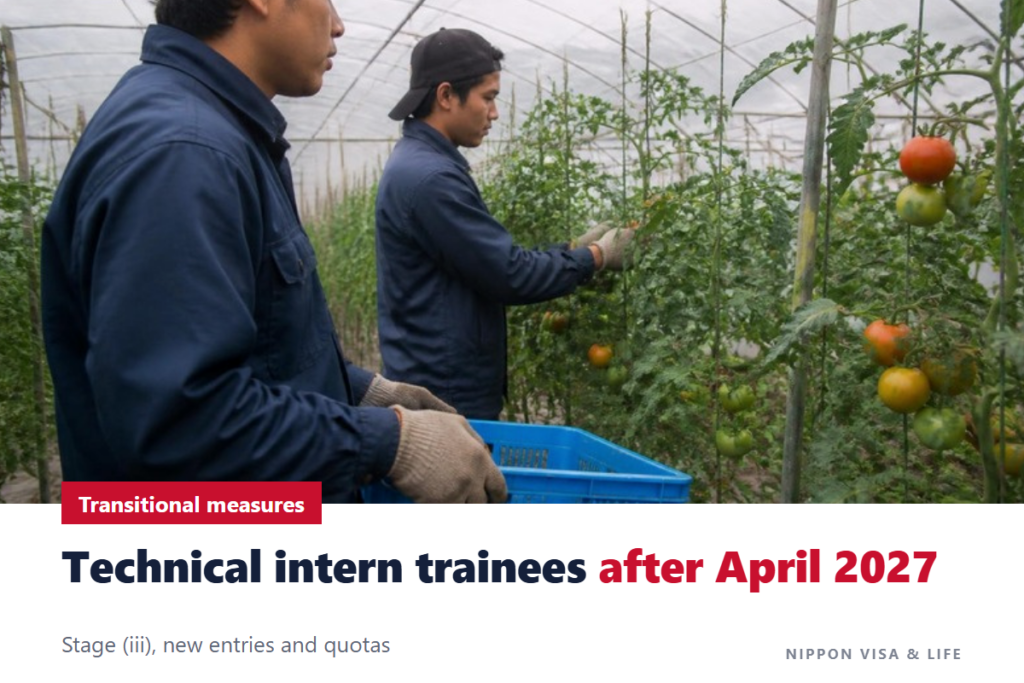
Transitional Measures for Employment for Skill Development in Japan: What Happens to Technical Intern Trainees from April 2027? Stage (iii), New Entries, and Acceptance Quotas
When the Employment for Skill Development system starts in Japan on April 1, 2027, Technical Intern Training will not end all at once. Based on the Immigration Services Agency's materials and Q&A on the transitional measures, this guide sets out the 3 cases in which Technical Intern Training can continue after the start date, how to count "1 year or more in stage (ii) as of the start date" to move on to stage (iii), the deadlines for new acceptance just before the start date (applications by March 31, entry by June 30), why trainees cannot switch to Employment for Skill Development, and how acceptance quotas and supervising organizations are treated. -
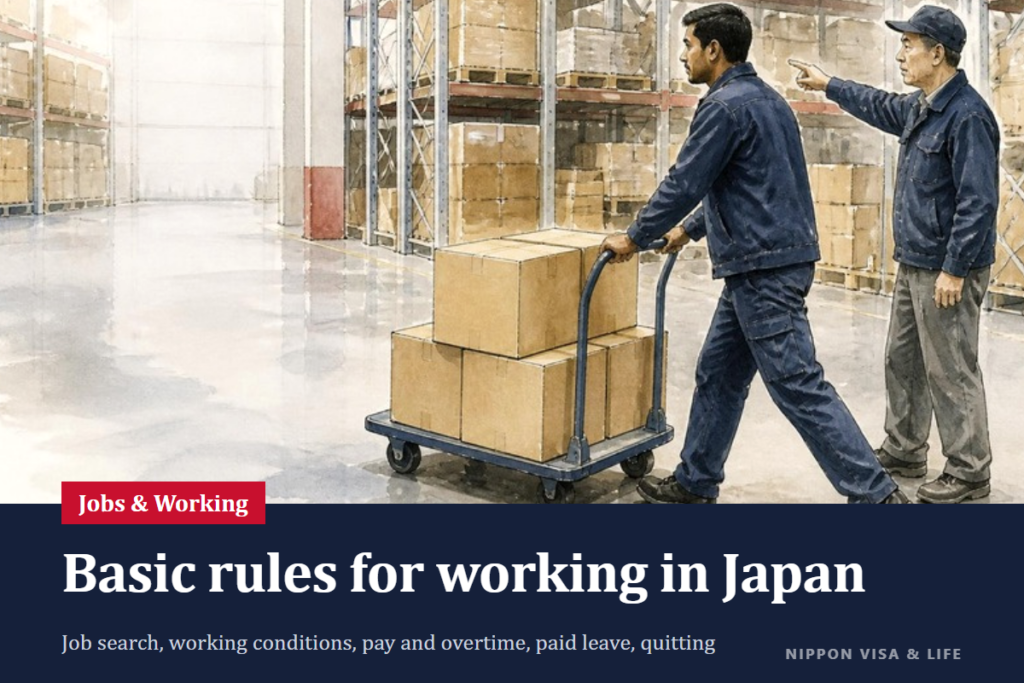
The Basics of Finding a Job and Working in Japan: Hello Work, Working Conditions, Wages and Overtime, Paid Leave, Quitting and Where to Get Help
The basics of finding a job and working that foreign residents working in Japan should know, organized by situation. Based on the Immigration Services Agency's "Guidebook on Living and Working" and information from the Ministry of Health, Labour and Welfare, this article explains how to look for a job at Hello Work, the working conditions to check before you start, how wages are paid, working hours and overtime pay, paid leave, social insurance, the rules for quitting, and consultation services available in foreign languages. -
What Are the Affiliated Organization Categories for Specified Skilled Workers in Japan? How Categories 1 to 4 Are Decided and Which Documents Can Be Omitted
In Japan, the "Categories 1 to 4" for affiliated organizations of Specified Skilled Workers are mainly about the upper limit of the period of stay. Whether a company can omit its own documents (Table 2) is decided by a separate standard: whether it has already accepted a Specified Skilled Worker in the same fiscal year, or whether it is an organization with a certain track record (Table 2-1). Based on Immigration Services Agency materials, this guide explains how to check the category, which documents can be omitted for each type of application, and points to note. -
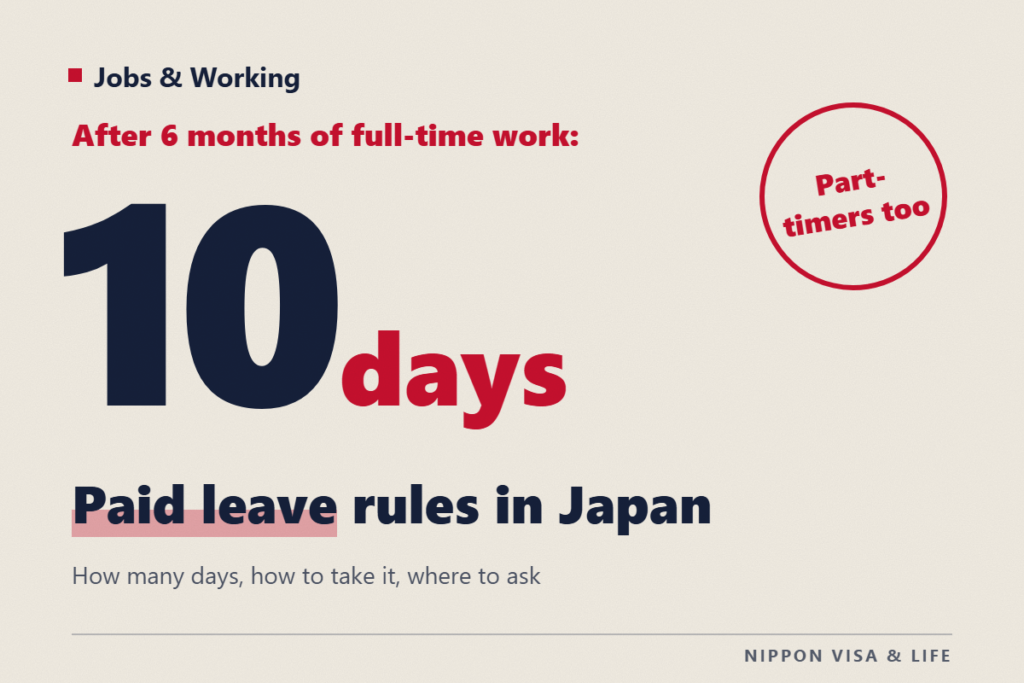
Paid Annual Leave Rules in Japan: How Many Days Do You Get? Can Part-Time Workers Take It Too?
Learn about annual paid leave (yukyu) for people working in Japan: how many days you get, the number of days for part-time workers, how to take days off, the rule that leave expires after 2 years, and where to get help (telephone consultation in foreign languages) if your company says "we have no paid leave", based on information from the Ministry of Health, Labour and Welfare and the Immigration Services Agency's "Guidebook on Living and Working". -
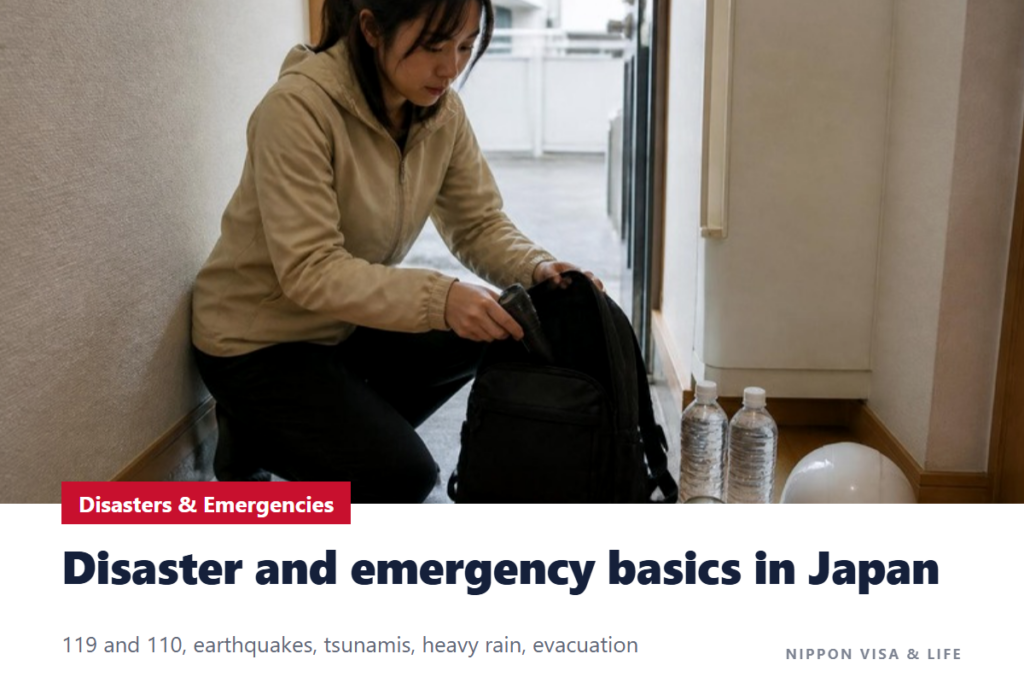
Disasters and Emergencies in Japan: The Basics | Calling 119 and 110, Earthquakes, Tsunami, Heavy Rain, Volcanoes, Evacuation and Multilingual Information
For foreign residents living in Japan, a summary by situation of what to do in emergencies and disasters, based on the Immigration Services Agency's "Guidebook on Living and Working" and other sources: the phone numbers to call for a sudden illness, fire or accident (119 and 110), what to do in earthquakes, tsunami, heavy rain or typhoons, and volcanic eruptions, alert levels and how to evacuate, contacting your family (Disaster Emergency Message Dial 171), and how to receive disaster information in foreign languages.