-

How Much Is the Salary in Employment for Skill Development in Japan? The “Equal to or Higher Than Japanese Workers” Rule and How Long You Can Work (3 Years in Principle, and After)
There is no fixed salary amount for Employment for Skill Development in Japan. The legal condition is that pay must be equal to or higher than what a Japanese person would receive for the same work. Based on the Immigration Services Agency's Operational Guidelines and Q&A, this guide sets out what counts as "remuneration" and what does not, the taxes, social insurance premiums, meals, and rent deducted from your pay, pay raises in the 2nd and 3rd years, the limit of 2 months' salary on fees paid to sending organizations, the working period of 3 years in principle (with an extension of up to 1 year), and the path afterward to Specified Skilled Worker (i) and (ii). -
How to Read a Pay Slip in Japan: Payments, Deductions and Attendance Sections, and How Income Tax, Resident Tax and Social Insurance Premiums Are Deducted
Learn how to read the pay slip (kyuyo meisai, a breakdown of your wages) you receive from a company in Japan: what the payments, deductions and attendance sections mean, how health insurance, employees' pension insurance and employment insurance premiums, income tax and resident tax are deducted from your wages, and what to check when your take-home pay seems low, based on the Immigration Services Agency's "Guidebook on Living and Working" and Japanese laws. -
Can You Leave Japan Without Your Residence Card for a Trip Home? How to Get a Re-entry Permit and the Steps Before and After Departure
If you do not have your residence card with you, you cannot leave Japan with a Special Re-entry Permit. If you go home temporarily while waiting to receive your new card by mail, get a re-entry permit at the counter of the Regional Immigration Services Bureau before you leave. This article explains where to apply, reception hours, fees, and the steps before and after departure. -
Where to Get Help When It Is Hard to Rent an Apartment in Japan: Safety Net Housing, Housing Support Corporations, Rent Guarantee Companies and Help in Foreign Languages
If you cannot find an apartment to rent in Japan, have no guarantor, or were turned down because you are a foreigner, there are public systems and places to get help. Based on information from the Ministry of Land, Infrastructure, Transport and Tourism and the Ministry of Justice, this article explains how to find Safety Net Housing that does not refuse tenants, how to consult a Housing Support Corporation, rent guarantee companies, public housing, and the Legal Affairs Bureau's human rights counseling in foreign languages. -
What to Do About Scam Emails, Text Messages and Phone Calls in Japan: Tricks Pretending to Be Delivery Companies, the Police or Immigration, and Where to Get Help (#9110 and 188)
Text messages saying a delivery company could not deliver your package, calls from people pretending to be police officers or immigration officials, international calls from numbers starting with "+": based on information from the National Police Agency, the Immigration Services Agency and the National Consumer Affairs Center of Japan, this article explains common scams in Japan and how to spot them. It also covers what to do if you tapped a link or paid money, and where to get help (#9110 and 188). -
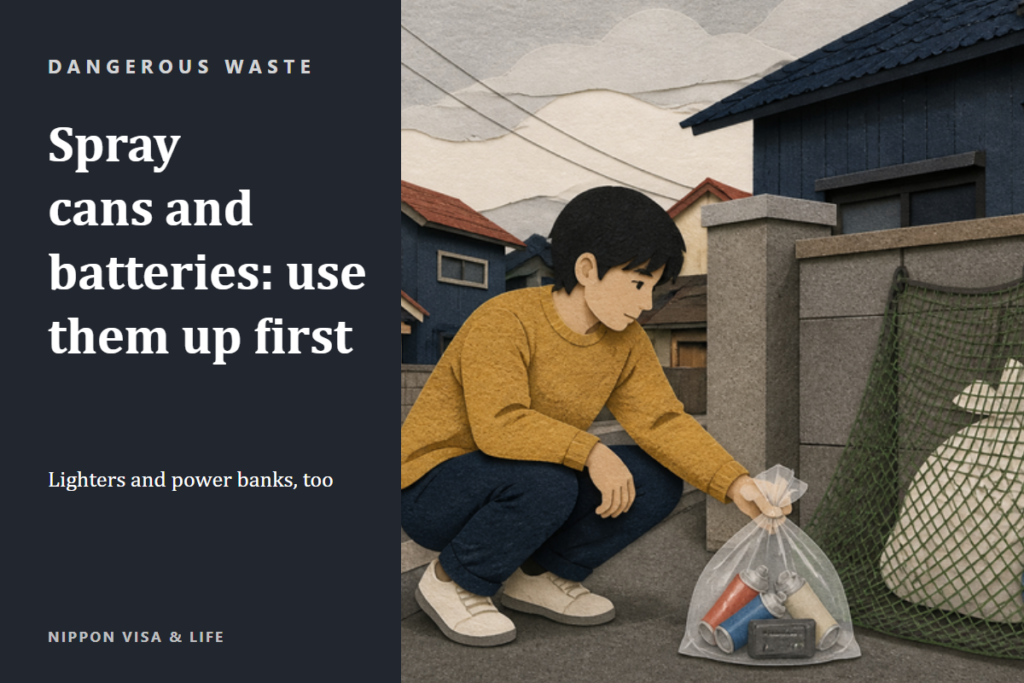
How to Throw Away Spray Cans, Batteries and Lighters in Japan: Disposing of Dangerous Waste Such as Lithium-Ion Batteries and Gas Canisters
In Japan, spray cans, portable gas canisters, lithium-ion batteries such as power banks, dry-cell batteries and lighters can cause fires in garbage trucks and waste treatment facilities if they are mixed with other garbage. Based on information from the government and local governments, this article explains what to do before throwing them away, examples of how each city or ward collects them, collection boxes in stores, and what to do with swollen batteries. -
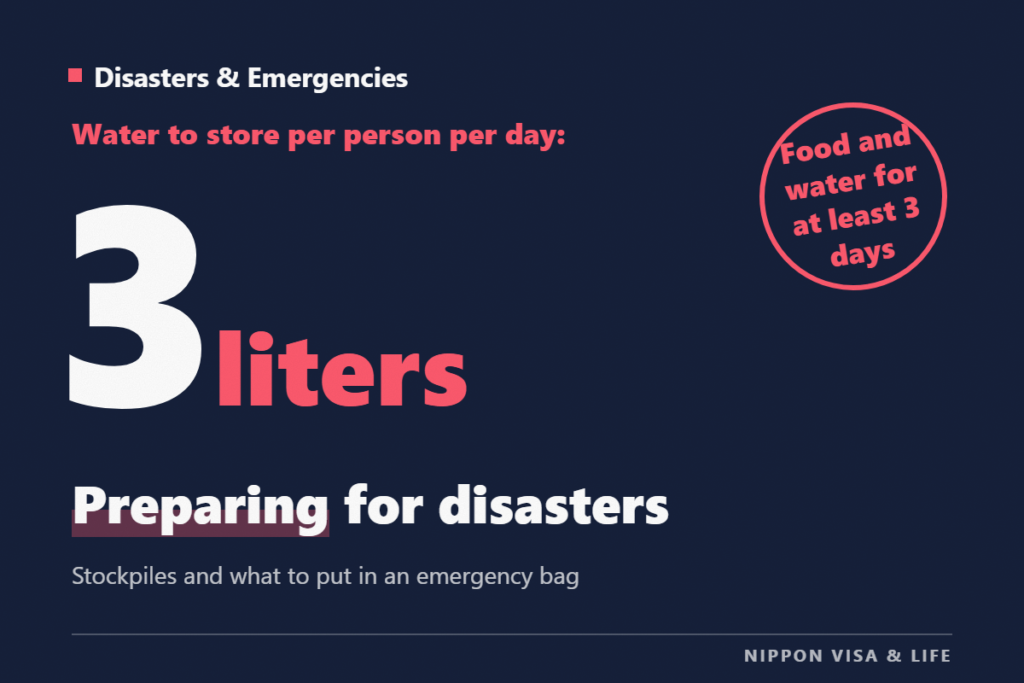
Preparing for Disasters in Japan: Stockpiling Food and Water (3 Days to 1 Week) and What to Put in an Emergency Grab Bag
Based on national government materials, this article explains how to prepare for disasters such as earthquakes and typhoons in Japan: how much food and water to keep at home (3 liters of water per person per day, for 3 days to 1 week), rolling stock (preparing with the food you normally eat), toilet supplies, what to put in an emergency grab bag, and how to contact your family (Disaster Emergency Message Dial 171). -
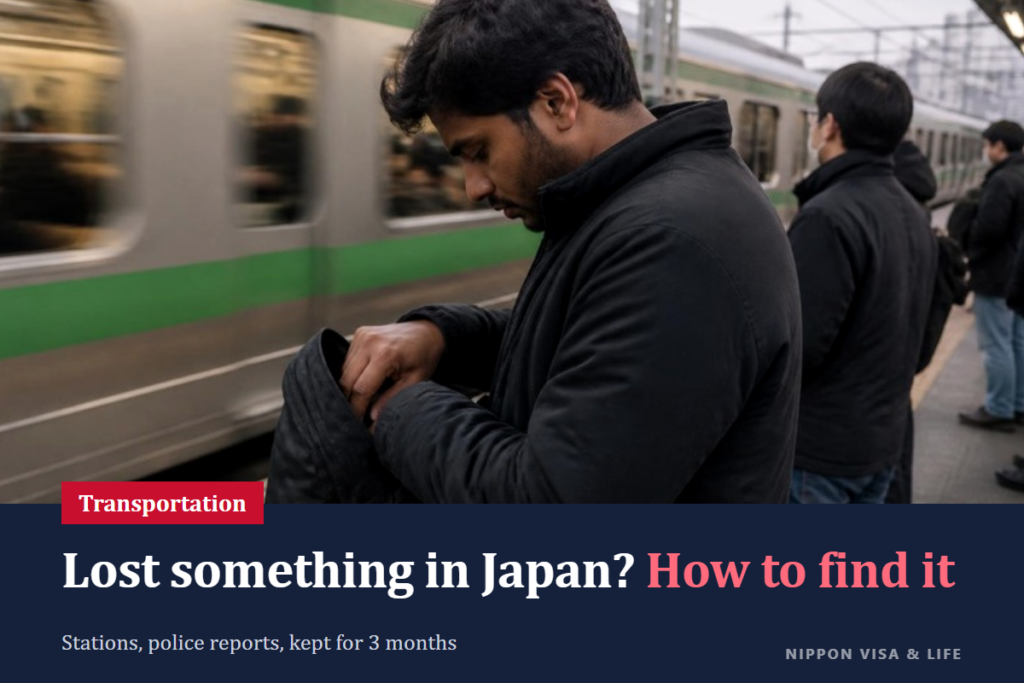
If You Lose Something or Leave Something Behind in Japan: How to Look for Items Lost at Stations, on Trains, Buses, Taxis or on the Street, and How to File a Lost Property Report
How to look for your things in Japan when you drop your wallet, smartphone or cards, or leave something on a train: contacting the station or railway company, filing a lost property report with the police, searching lost items online, the storage period (3 months), what you need to collect an item, how to stop your cards and smartphone, and what to do if you lose your residence card. -
If You Get Sick at Night or on a Holiday in Japan: How to Find a Clinic Open Now and Phone Advice Lines (#7119 and #8000)
Where you can see a doctor in Japan when you get sick at night or on a Sunday or public holiday: how holiday emergency clinics, night emergency centers and on-duty doctors work, how to search on the Ministry of Health, Labour and Welfare's "Medical Information Net (Navii)", the #7119 and #8000 phone advice lines, help in foreign languages, and what to bring. -
The 17 Job Categories of Specified Skilled Worker in Japan’s Industrial Product Manufacturing Field|Permitted Work, Exam Categories, and Working Across Categories
A table-based guide to the 17 job categories for (i) and 3 for (ii) of Specified Skilled Worker in the industrial product manufacturing field in Japan: the scope of work in each category, the exam categories, and the Technical Intern Training (ii) occupations exempt from the exams. Based on the operational guidelines and JAIM's FAQ, we explain why those who entered through the exams and those who moved from technical intern training can work in different categories, and which exams and notifications are needed to have a worker do another skill in the same category, a different category, or work in a different field.