-

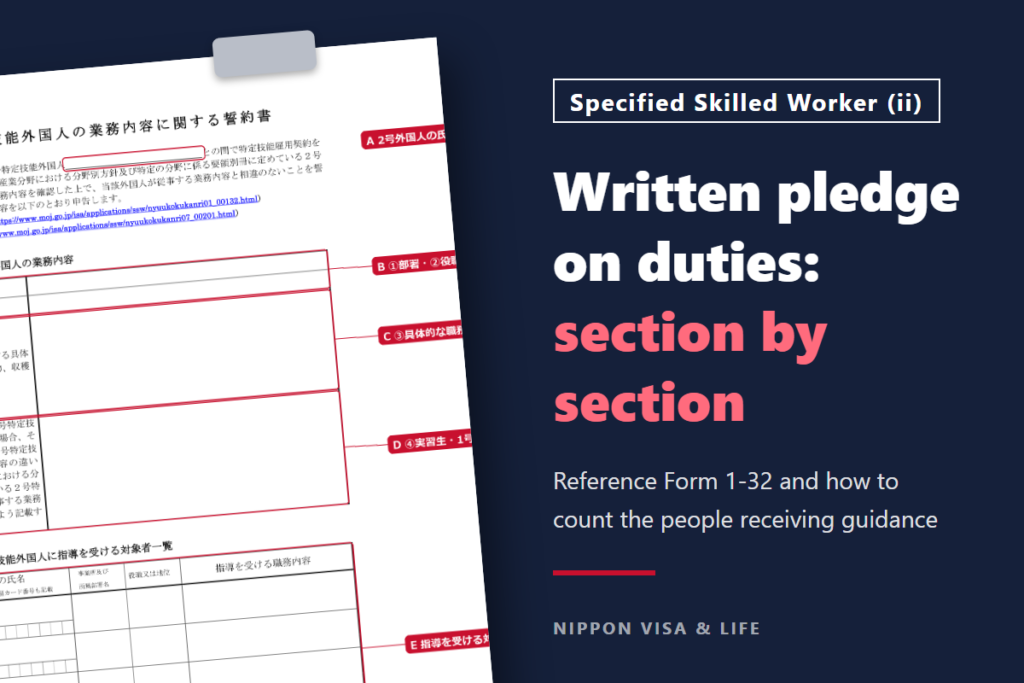
How to Fill Out the Written Pledge on the Duties of Specified Skilled Worker (ii) in Japan|Entries for Each Section of the Form and How to Count the People Receiving Guidance
How to fill out Reference Form No. 1-32, the Written Pledge on the Duties of a Specified Skilled Worker (ii) foreign national in Japan, explained field by field with images of the form. Based on Immigration Services Agency materials, we cover the number of people receiving guidance required in each field, how to count people at another workplace or people who receive guidance from another (ii) worker, and the checkbox for when the number is temporarily short. -
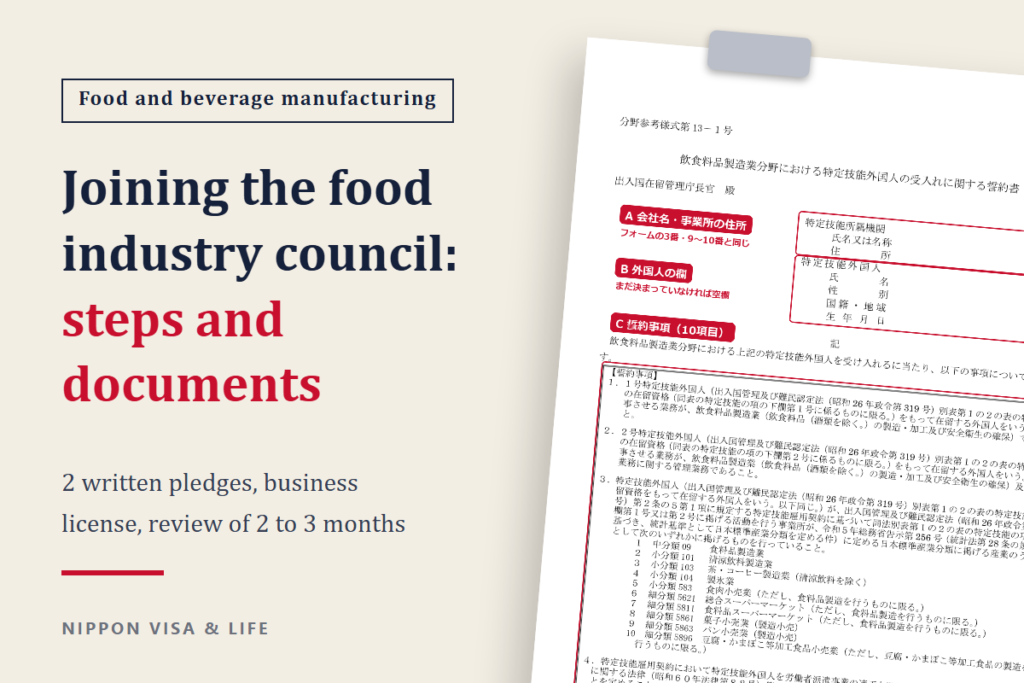
How to Join the Food Industry Specified Skilled Worker Council in Japan|For Accepting Companies and Registered Support Organizations in Food and Beverage Manufacturing
The membership procedure for the Food Industry Specified Skilled Worker Council in Japan, which accepting companies and registered support organizations in the food and beverage manufacturing field must complete before applying to immigration. Based on guidance from the Ministry of Agriculture, Forestry and Fisheries, this guide covers filling in the membership application form, how to fill out the 2 written pledges required from September 1, 2026, points to check on the business license, what to watch during the review (about 2 to 3 months), how to use the membership certificate, and changes and withdrawal after joining. -
Registering with the Construction Career Up System (CCUS) in Japan | What Is Required of Specified Skilled Workers and Accepting Companies
To employ foreign nationals as Specified Skilled Worker (i) in the construction field in Japan, the accepting company must complete CCUS business operator registration and the worker must complete technician registration. This article explains, based on the operational guidelines and information from MLIT and the Foundation for Construction Industry Promotion, that you cannot apply for the Acceptance Plan before obtaining a business operator ID; that the timing for submitting the technician ID document differs for people living in Japan and people entering from overseas (people entering from overseas: in principle within 1 month after entry); how to choose between the simplified type and the detailed type; and the registration fees, administrator ID fees, and JAC support. -
How to Ride the Shinkansen and Limited Express Trains in Japan: Basic Fare Tickets and Limited Express Tickets, Reserved and Non-reserved Seats, Buying Tickets, and Rules for Large Luggage
The basics of riding the shinkansen and limited express trains for foreign residents in Japan: the tickets you need (basic fare ticket and limited express ticket), the differences between reserved seats, non-reserved seats and Green Cars, when reserved seats go on sale, how to go through the ticket gates, children's fares, reserving space for large luggage, and the rules when you miss your train, based on official information from the JR companies. -
Rules for Keeping a Dog or Cat in Japan: Dog Registration, Rabies Vaccinations, Microchips, and Manners in Apartments and on Walks
The basic rules for foreign residents keeping a dog or cat in Japan: dog registration (within 30 days) and a rabies vaccination once a year, the dog license tag and vaccination tag, changing microchip registration, notifications when you move or your pet dies, manners in apartment buildings and on walks, and points to note when you bring a pet to Japan or leave Japan with one, based on information from the Ministry of Health, Labour and Welfare, the Ministry of the Environment and others. -
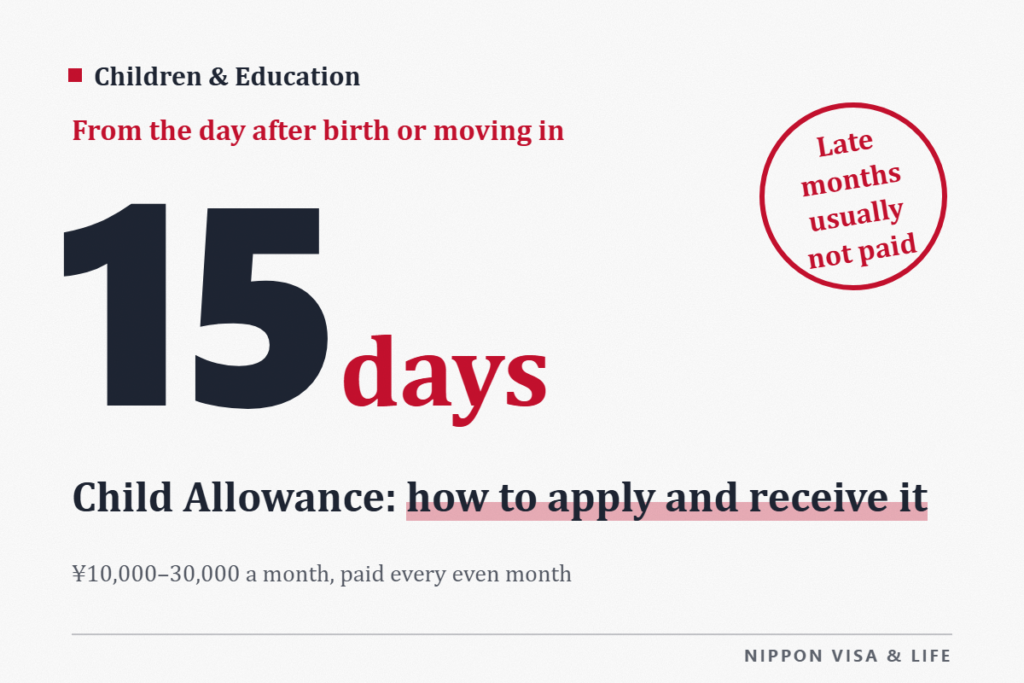
How to Apply for and Receive the Child Allowance in Japan: Amounts, Payment Months, Applying Within 15 Days, and Moving or Living Abroad
The basics of the Child Allowance (jido teate) for foreign residents raising children in Japan: the monthly amount per child up to high-school age, payment in even-numbered months, applying within 15 days from the day after the birth or the day after moving in, and notifications and points to note when you move or live abroad, based on information from the Children and Families Agency. -
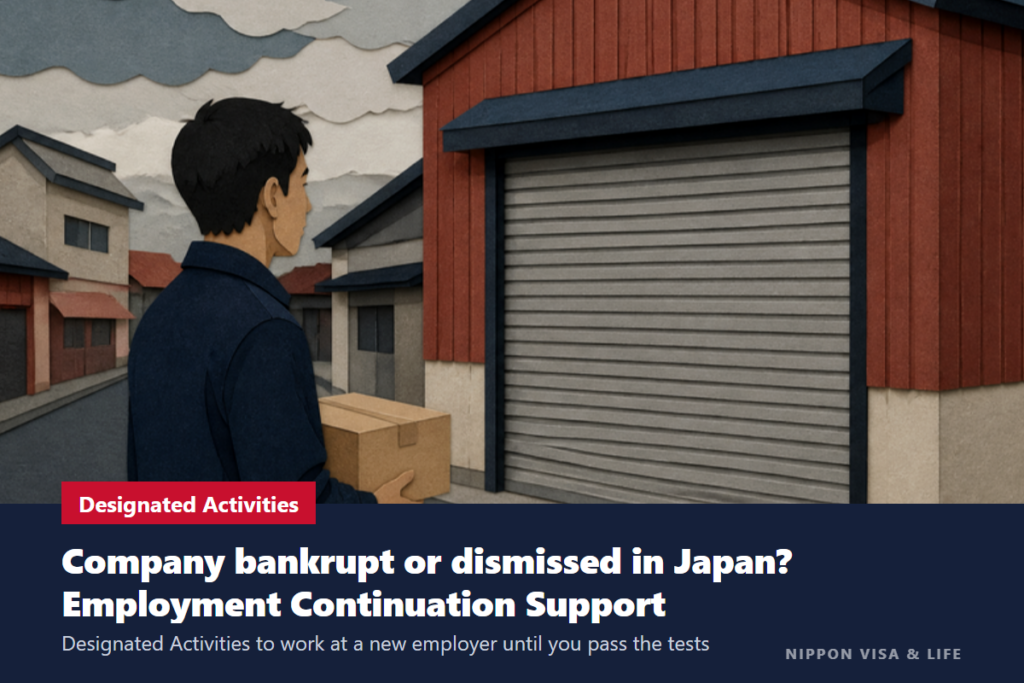
If You Can No Longer Work in Japan Because Your Company Went Bankrupt or Dismissed You|Designated Activities (Employment Continuation Support): Eligibility, Requirements, and Application Process
In Japan, foreign nationals who can no longer continue working for reasons they are not responsible for, such as their company's bankruptcy or a dismissal, and who have not yet passed the Specified Skilled Worker tests, can aim to pass the tests while working at an accepting organization that meets the requirements, under "Designated Activities (Employment Continuation Support)." Based on Immigration Services Agency materials, this article covers the 3 eligible types, how the 3 months are counted, the scope of work allowed, the period of stay of 1 year with up to 2 extensions, the requirements for accepting organizations, and the documents to submit. -
What Are Generic Medicines in Japan? What the Pharmacy Will Ask You and the Special Fee When You Choose a Brand-Name Medicine
The basics of generic medicines (kohatsu iyakuhin) for foreign residents in Japan: how they differ from brand-name (original) medicines, how to answer when the pharmacy asks "Would you like a generic?", how the "special fee" works now that it became one half of the price difference from June 2026, and when you do not have to pay it, based on materials from the Ministry of Health, Labour and Welfare. -
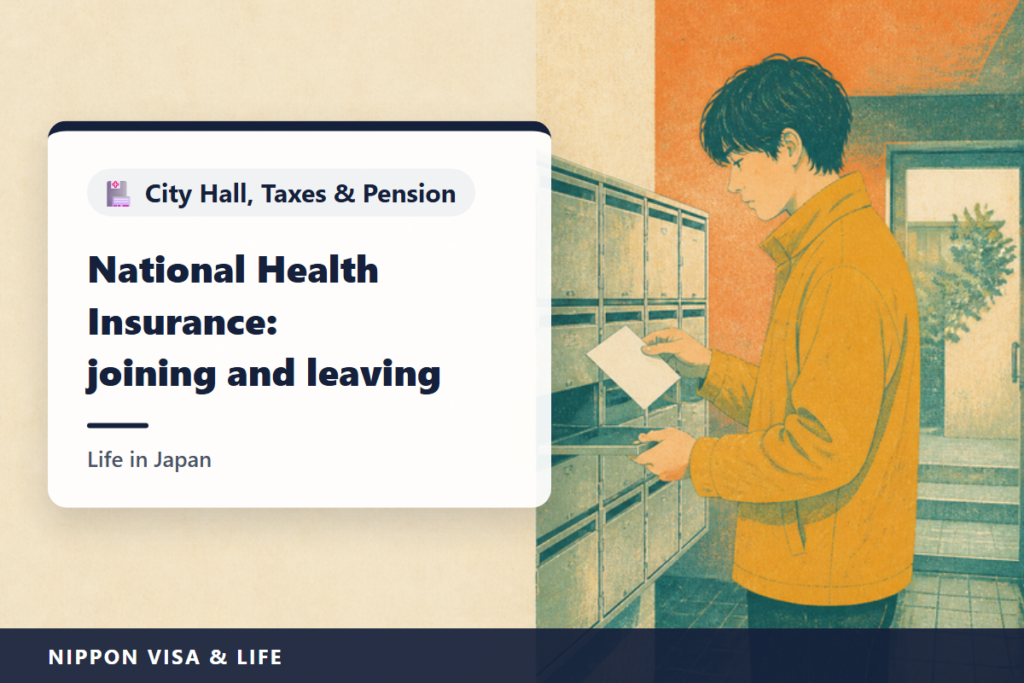
How to Join and Leave National Health Insurance in Japan: Who Must Join, the 14-Day Notification, What to Bring, Premiums and Reductions
A guide for foreign residents in Japan on how to join and leave National Health Insurance (kokuho): who must join and who does not, the notification within 14 days, the procedures when you quit your job, join your company's insurance, move or leave Japan, examples of what to bring, and premiums and reductions, based on the Immigration Services Agency's "Guidebook on Living and Working," the Ministry of Health, Labour and Welfare and the law. -
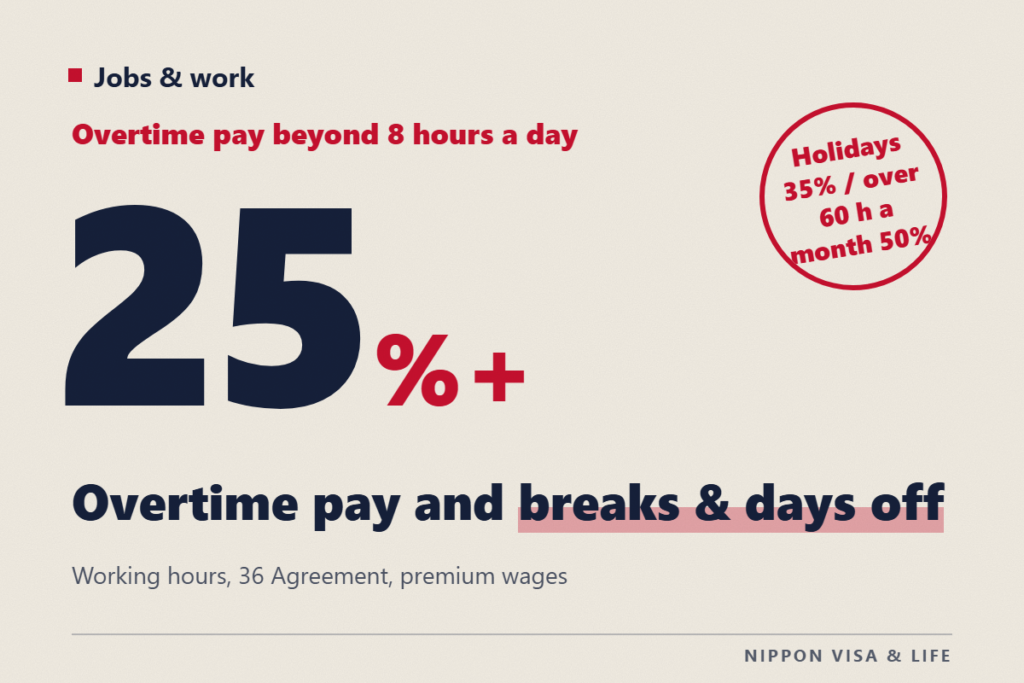
Overtime and Overtime Pay Rules in Japan: The Basics of Working Hours, Breaks, Holidays and Premium Wages (25%, 35% and 50%)
The basic rules on working hours, breaks, holidays and overtime for people working in Japan: the statutory working hours of 8 hours a day and 40 hours a week, break times, the 36 Agreement and the upper limits on overtime, the premium rates for overtime pay (premium wages), and where to get help when overtime pay is not paid, based on the Immigration Services Agency's "Guidebook on Living and Working" and the Labor Standards Act.