-

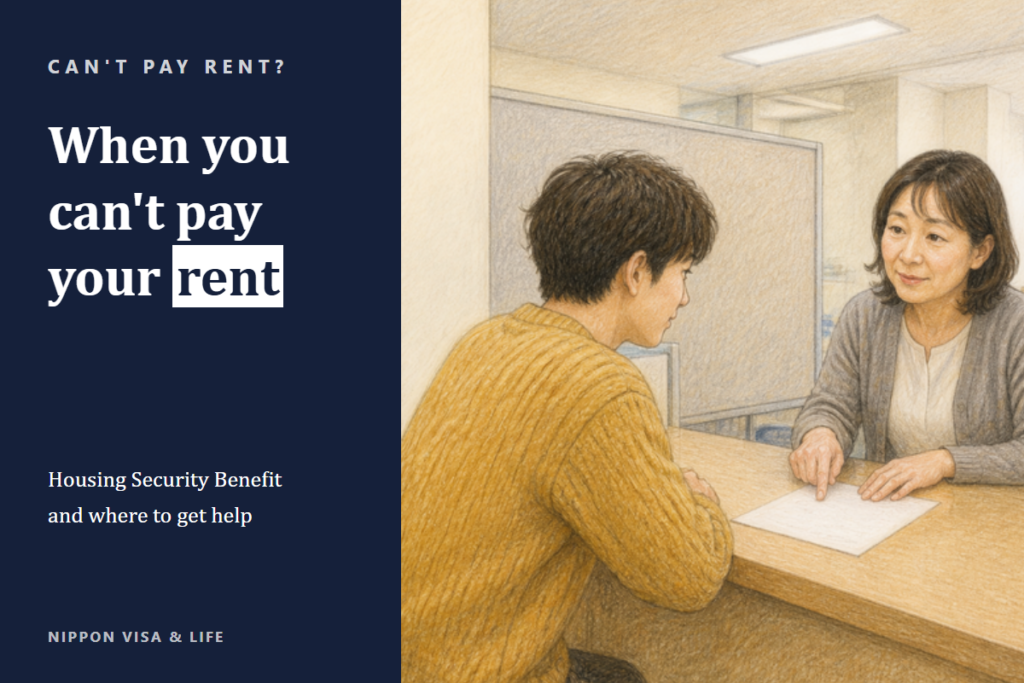
When You Cannot Pay Your Rent in Japan: The Basics of Paying Rent, the Housing Security Benefit and Where to Get Help
The basics of when and how to pay rent for a rental apartment in Japan, and the national government's systems you can use if you lose your job or your income goes down and you may not be able to pay your rent. Based on information from the Ministry of Health, Labour and Welfare and the Ministry of Land, Infrastructure, Transport and Tourism, this article explains who can receive the Housing Security Benefit, which supports the amount of your rent, its conditions and how long it is paid, the support for moving costs, and how to consult a Self-Reliance Support Consultation Office or a Council of Social Welfare. -
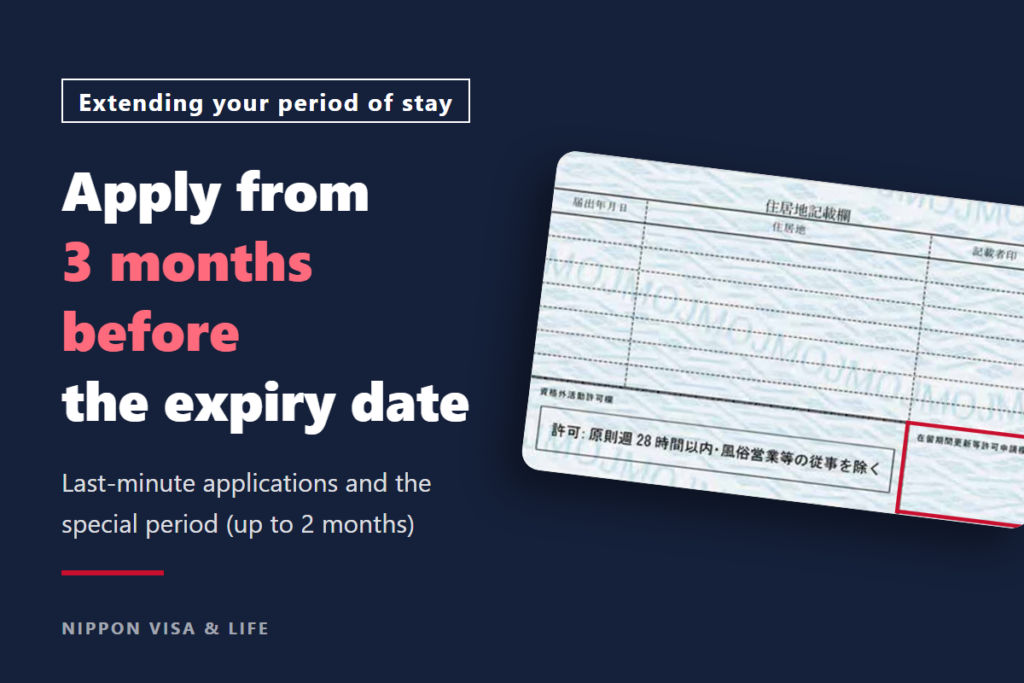
When Can You Apply to Extend Your Period of Stay in Japan? Applying from 3 Months Before, Last-Minute Applications, and the Special Period
In Japan, you can in principle apply to extend your period of stay from 3 months before the expiration date up to the expiration date. Based on Immigration Services Agency materials and the Immigration Control Act, this guide covers 8 examples of special circumstances that allow you to apply earlier than 3 months, why online applications are not possible on the expiration date itself, the special period (up to 2 months) when the expiration date passes during the examination and how to prove it with the back of the residence card or the receipt completion email, and points to note when leaving Japan during the special period. -
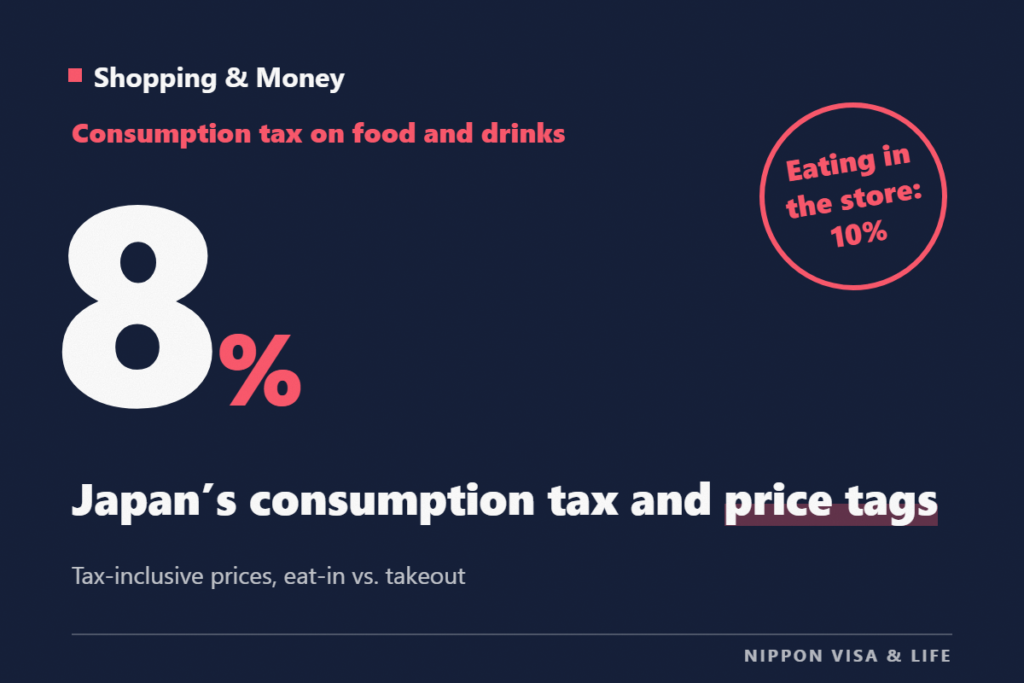
Consumption Tax and Price Labels in Japan: Reading Tax-Included and Tax-Excluded Prices, 8% vs. 10%, and Eating In vs. Taking Out
This article explains the basics of consumption tax when shopping in Japan: how to read tax-included and tax-excluded prices, why food is taxed at 8% while other things are taxed at 10%, why the tax rate differs between eating in and taking out at convenience stores, what the "※" mark on receipts means, and the planned cut in the tax rate on food and drinks from April 2027, based on information from the National Tax Agency. -
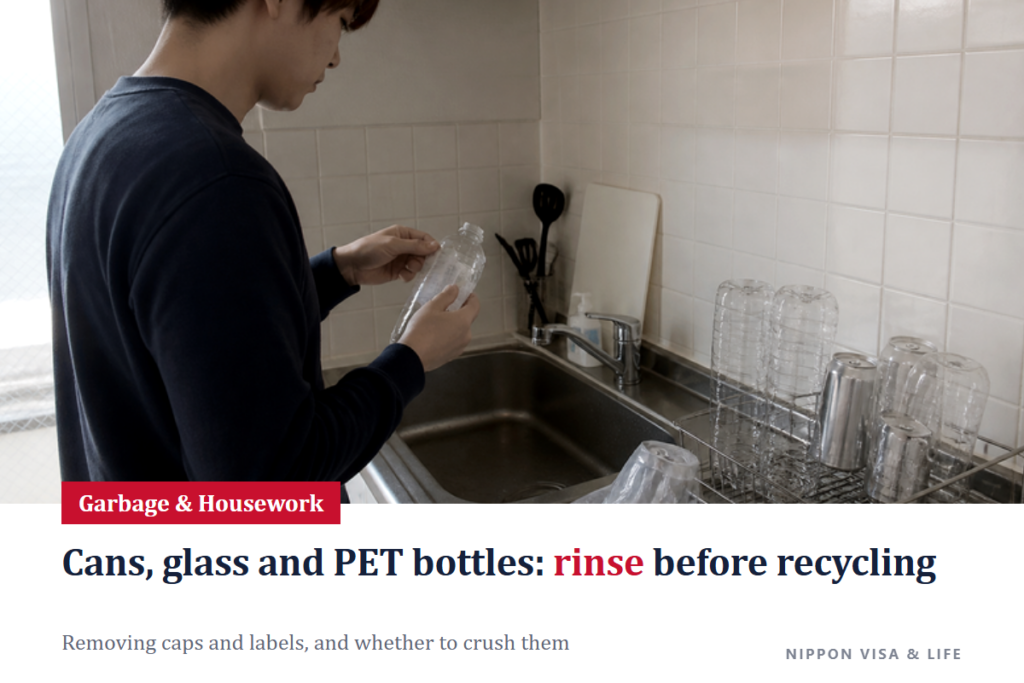
How to Throw Away PET Bottles, Cans and Glass Bottles in Japan: Removing Caps and Labels, Rinsing, and Whether to Crush Them
In Japan, PET bottles, cans and glass bottles are put out as "recyclables" (shigen), separately from other garbage. Based on the official information of Yokohama City, Nagoya City, Osaka City and Shinjuku City, this article explains how to remove caps and labels, how to rinse the inside, whether to crush them, which bags to use, and how to use collection boxes at supermarkets. -
Heavy Rain and Typhoon Alert Levels and Evacuation Information in Japan: When to Evacuate at Level 3 and 4, and New Names Such as “Level 4 Heavy Rain Urgent Warning”
This article explains the meaning of the "alert levels" (1 to 5) issued in Japan during heavy rain and typhoons, and when to evacuate. Based on materials from the Cabinet Office and the Japan Meteorological Agency, it covers the evacuation information issued by cities, towns and villages (Evacuation of Elderly People, etc., Evacuation Instruction, Emergency Safety Measure), the new information names the Japan Meteorological Agency has used since May 29, 2026, such as "Level 3 Heavy Rain Warning" and "Level 4 Landslide Urgent Warning", and how to check KIKIKURU and information in other languages. -
If You Are in or Cause a Traffic Accident in Japan: What to Do on the Spot, Reporting to the Police, the Traffic Accident Certificate and Claiming Compulsory Automobile Liability Insurance
What to do if you are in or cause a traffic accident in Japan, based on information from the Road Traffic Act, the Ministry of Land, Infrastructure, Transport and Tourism and the Japan Safe Driving Center. This article covers helping injured people and calling 110 on the spot, recording the other party and the scene, seeing a doctor, how to get a Traffic Accident Certificate (fee: 1,000 yen), claiming compulsory automobile liability insurance (jibaiseki) and the deadline (3 years), and where you can get advice in foreign languages. -
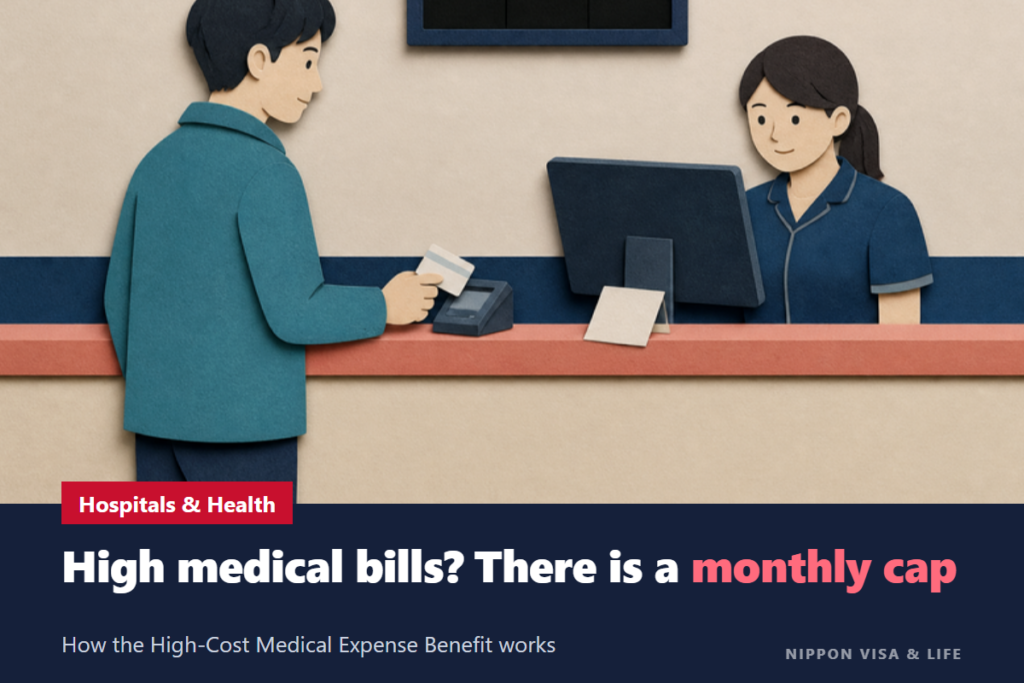
When Medical Costs Get High in Japan: How the High-Cost Medical Expense Benefit Works, Monthly Limits and How to Apply (Updated for the Changes from August 2026)
If your medical costs get high in Japan because of a hospital stay or surgery, the "High-Cost Medical Expense Benefit" (kogaku ryoyohi) puts a limit on what you pay each month. Based on information from the Ministry of Health, Labour and Welfare and the Japan Health Insurance Association (Kyokai Kenpo), this article explains the limits from August 2026 (under age 70), the new annual limit, how to keep payments at the counter down, and where and by when to apply. -
How to Use a Sento or Onsen (Public Bath or Hot Spring) in Japan: What to Do Before Bathing, Bath Rules, Tattoos, Children’s Ages and Fees
For people going to a sento (public bath) or onsen (hot spring) in Japan for the first time, we summarize the steps and rules: wash your body before getting into the bath, do not put your towel in the bath, swimsuits and taking photos, how to check if you have a tattoo, the age guideline for children in the men's and women's baths, sento fees, and not bathing when you feel unwell or after drinking alcohol, based on materials from the Immigration Services Agency, the Ministry of Health, Labour and Welfare, the Ministry of the Environment and the Japan Tourism Agency. -
How to Find a Local Japanese Language Class in Japan: Finding Free or Low-Cost Classes, What to Check Before You Apply, and Online Learning When You Cannot Attend
Learn how foreign residents in Japan can find a Japanese language class near them: how to search through your city, ward, town or village and international exchange associations, what to check before you apply, how classes differ from Japanese language schools, and the government learning sites you can use when you cannot attend a class (Tsunahiro and Nihongo Check!), based on the Immigration Services Agency's "Guidebook on Living and Working" and other sources. -
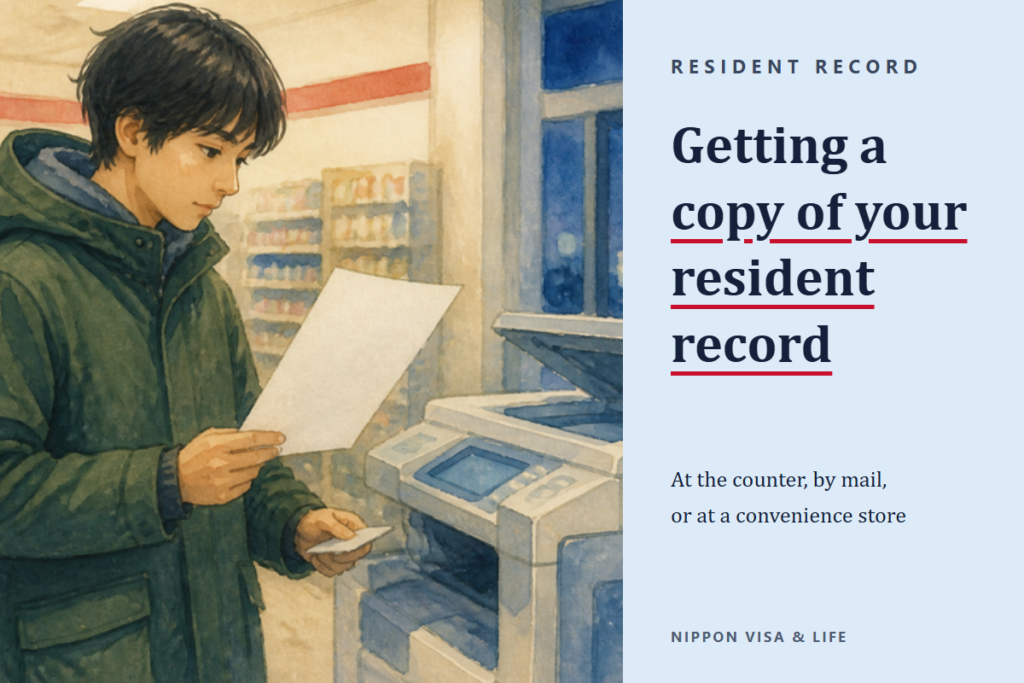
How to Get a Copy of Your Resident Record in Japan: At the City Office, by Mail or at a Convenience Store, and Which Items Foreign Residents Should Choose to Include
Learn how foreign residents in Japan can get a copy of the resident record (juminhyo, a document that certifies your address): how to request it at the city office, by mail, or through convenience store issuance (using your My Number Card), what to bring, how to choose whether to include your status of residence and nationality, and how to ask a representative, based on the Basic Resident Registration Act and information from local governments and the Japan Agency for Local Authority Information Systems.