-

The Basics of Raising Children in Japan: Pregnancy and Birth Procedures, Child Allowance, Checkups and Vaccinations, Nursery Schools and Kindergartens, Elementary and Junior High School
For foreign families raising children in Japan: a guide by situation covering the pregnancy notification and the Maternal and Child Health Handbook, the birth registration and your child's status of residence, the child allowance, children's medical expenses, health checkups and vaccinations for infants and young children, nursery schools, kindergartens and certified centers for early childhood education and care, entering elementary and junior high school, and where to get advice. -
Children’s Vaccinations in Japan: Free Routine Vaccinations, Types, Timing, How to Get Them and What to Bring
Children's vaccinations in Japan: the difference between free "routine vaccinations" and "voluntary vaccinations" you pay for yourself, the types of vaccines and when to start, the pre-vaccination questionnaire sent by your city, ward, town or village, what to bring to the clinic, and what to do when you move here, based on information from the Ministry of Health, Labour and Welfare. -
Manners and Rules to Know When Living in Japan: At Home, on Trains and Buses, at Hot Springs, with Neighbors, Alcohol and Tobacco, and Holidays
A guide, by situation, to the manners and rules you should know when living in Japan. Based on the Immigration Services Agency's "Guidebook on Living and Working" and the Ministry of Land, Infrastructure, Transport and Tourism's "Apartment Search Guidebook", it explains life at home (garbage, noise, shoes and toilets), walking outside (using a smartphone while walking, littering), trains and buses, hot springs and public baths, neighbors and neighborhood associations, crime prevention, alcohol and tobacco, and national holidays and the New Year period. -
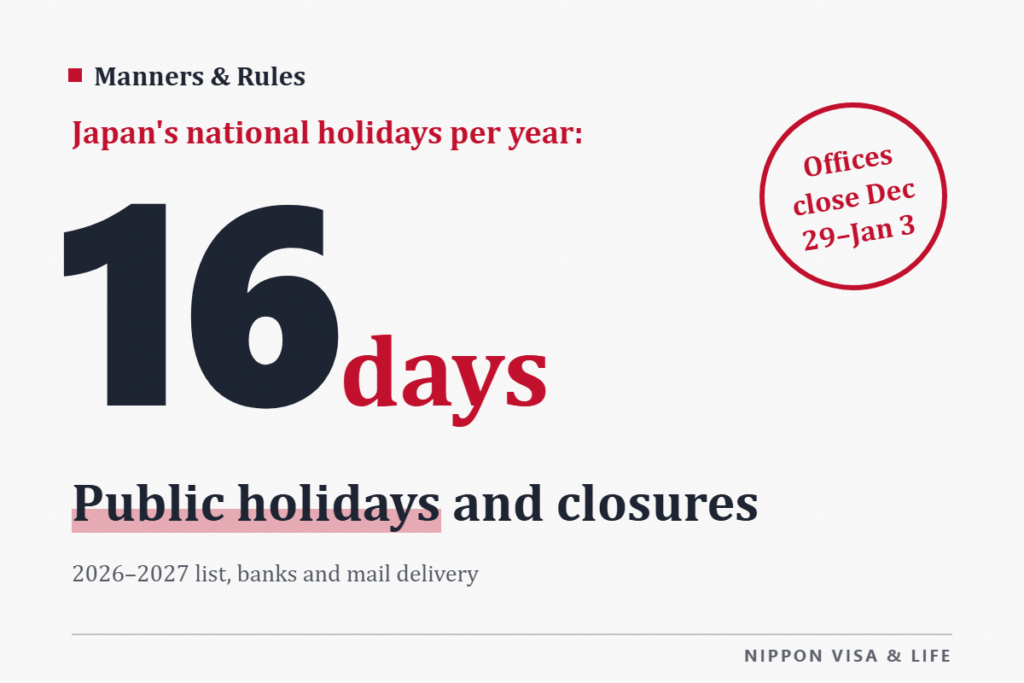
Public Holidays and New Year Closures in Japan: List of Holidays for 2026 and 2027, and Days When Government Offices, Banks and Post Offices Are Closed
Based on information from the Cabinet Office, Japanese laws and Japan Post, this article explains Japan's national holidays (list for 2026 and 2027), how substitute holidays work, government office closures from December 29 to January 3, bank holidays, mail delivery on Saturdays, Sundays and holidays, and what to keep in mind during Obon and Golden Week. -
[Breaking News] Japan Building Maintenance Association Announces Schedule for the Building Cleaning Specified Skilled Worker (ii) Test on December 18 (October 20, 2026)
On October 20, 2026, the Japan Building Maintenance Association announced the schedule for the building cleaning Specified Skilled Worker (ii) evaluation test to be held in Japan on December 18, 2026. Online applications run from October 27 to November 10, and application documents must arrive by November 24. This article reports only the facts of the announcement. -
When You Cannot Pay National Pension Premiums in Japan: How to Apply for Exemption or Payment Postponement (Income Criteria, Where to Apply, What to Bring, Making Up Payments Later)
If it is difficult for you to pay National Pension premiums in Japan (17,920 yen per month for fiscal year Reiwa 8), you can use the premium exemption system and the payment postponement system. Based on information from the Japan Pension Service, this article explains the income criteria, where to apply and what to bring, how far back you can apply, the special rule when you leave your job, the rules for students, and making up payments later (tsuno). -
Unemployment Benefits in Japan After Leaving Your Job: Separation Notice, Hello Work Procedures, Conditions and How Long You Can Receive Them
Learn about the basic allowance of employment insurance (unemployment benefits) you may receive after leaving a company in Japan: the conditions, how to get your separation notice, the steps and what to bring for the procedures at Hello Work, when payments start, and how many days you can receive them, based on information from Hello Work and the Immigration Services Agency's "Guidebook on Living and Working". -
How to Rent an Apartment and Move in Japan: Finding a Home, Contracts, Move-in Costs, Moving In, House Rules and Moving Out
This article explains, step by step, how to rent an apartment in Japan, from finding a home to signing the contract, moving in, the rules while you live there, and moving out. Based on the Immigration Services Agency's "Guidebook on Living and Working" and the Ministry of Land, Infrastructure, Transport and Tourism's "Apartment Search Guidebook", it covers move-in costs such as the security deposit, key money, brokerage fee and guarantee company, the documents needed for the tenant screening, applying for electricity, gas and water, giving notice to cancel, public housing and UR rental housing, and information available in foreign languages. -
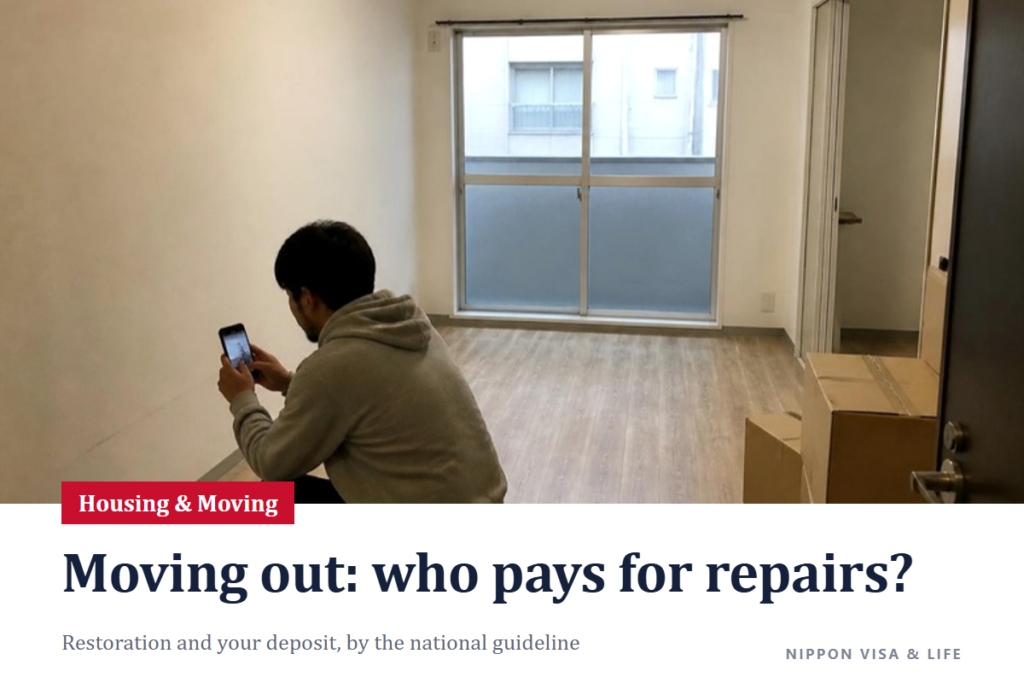
Restoration and Security Deposits When Moving Out of a Rental Home in Japan: Who Pays for Repairs? Examples from the National Government’s Guidelines
When you move out of an apartment in Japan, who pays for repairs? Based on the Ministry of Land, Infrastructure, Transport and Tourism's "Guidelines on Troubles Concerning Restoration to Original Condition" and the Civil Code, this article explains general examples of costs paid by the tenant and costs paid by the landlord, how the security deposit is returned, what to do when moving in and moving out, and where to get advice if you do not agree. -
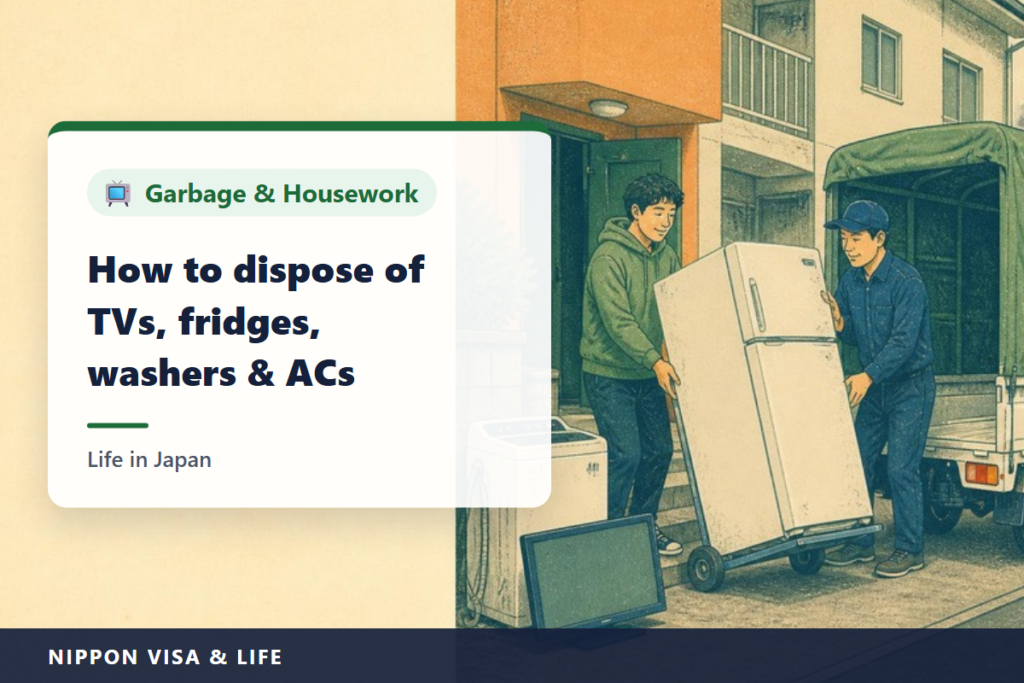
How to Throw Away a TV, Refrigerator, Washing Machine or Air Conditioner in Japan: Disposal Methods and Fees for the 4 Items Covered by the Home Appliance Recycling Act
In Japan, TVs, refrigerators, washing machines and air conditioners (the 4 types of home appliances) are thrown away in a set way that is different from regular garbage. Based on information from the Ministry of Economy, Trade and Industry, the Ministry of the Environment and local governments, this article explains how to ask the store where you bought the product or the store where you buy a new one, what to do if you do not know the store, how to pay the fee at a post office and carry the item yourself, the fees, and why you should be careful with "free collection."