-

How to Find Evacuation Sites, Evacuation Shelters and Hazard Maps in Japan: What to Check for Your Address Before a Disaster
Learn the difference between the places you escape to when a disaster strikes in Japan (Designated Emergency Evacuation Sites and Designated Evacuation Shelters), and how to check the risks and evacuation sites for your own address using the Ministry of Land, Infrastructure, Transport and Tourism's "Hazard Map Portal Site" and the hazard maps of your city, ward, town or village, based on the Immigration Services Agency's "Guidebook on Living and Working" and information from the Geospatial Information Authority of Japan. -
The Basics of Money and Shopping in Japan: Bank Accounts, Ways to Pay, Consumption Tax, Smartphone Contracts, Sending Money Abroad and Where to Get Help
This article summarizes, situation by situation, the basics of money and shopping that foreign nationals who have started living in Japan should know. Based on information from the Immigration Services Agency and the Financial Services Agency, it explains how to open a bank account, how to pay utility bills, consumption tax (10% and 8%), what you need for a smartphone contract, points to note when sending money abroad, things you must not do, and where to get advice when you have trouble with shopping or contracts. -
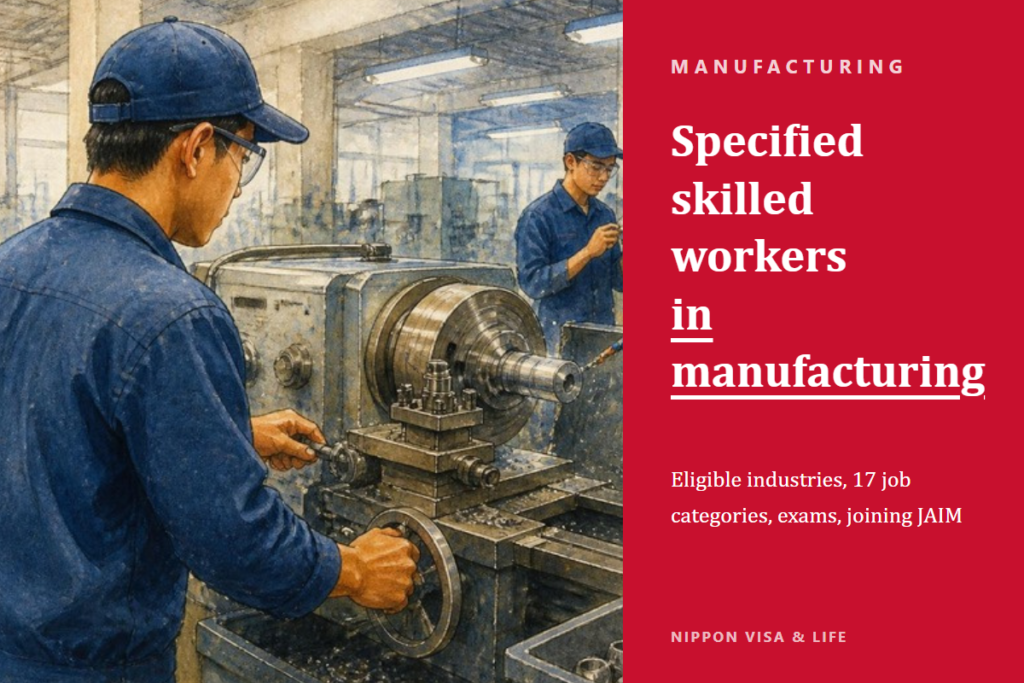
Guide to Accepting Specified Skilled Workers in the Industrial Product Manufacturing Field in Japan|Eligible Industry Classifications, 17 Job Categories, Exams, and Joining JAIM
The overall picture of hiring foreign nationals on Specified Skilled Worker status at factories in Japan for metal processing, machinery, electrical and electronic equipment, plastics, plating, paper containers, printing, textiles, furniture, rubber, and more. Based on the operational guidelines (partially revised June 25, Reiwa 8) and guidance from the Ministry of Economy, Trade and Industry (METI) and JAIM, this guide covers eligible industry classifications (76 classifications for (i)), the 17 job categories, exams and Japanese language, joining JAIM (an average of 2 to 3 months until listed in the register; annual fee 60,000 yen to 83,000 yen), the field-specific documents for immigration, and the two routes to Specified Skilled Worker (ii). -
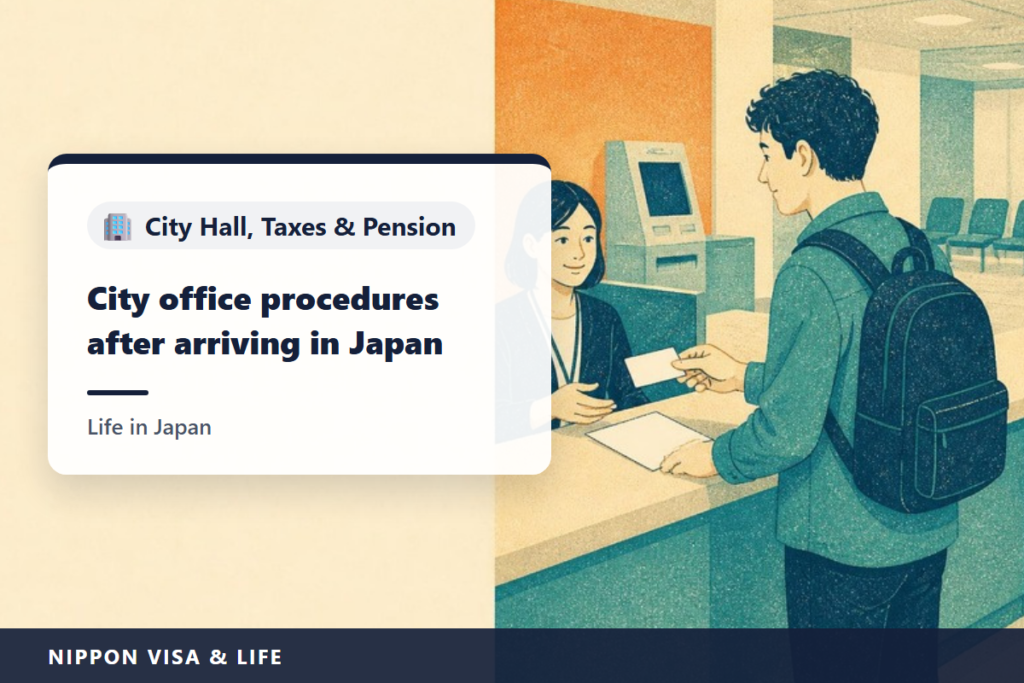
Procedures at the City Office After You Arrive in Japan: The Basics of the Moving-in Notification, My Number, National Health Insurance, National Pension and Resident Tax
After you come to Japan and decide where to live, there are procedures to complete at your city, ward, town or village office. Based on information from the Immigration Services Agency, the Japan Pension Service and others, this article explains in order the moving-in notification (within 14 days), My Number, National Health Insurance, National Pension, resident tax, the procedures when you move or return to your home country, and where you can get advice. -
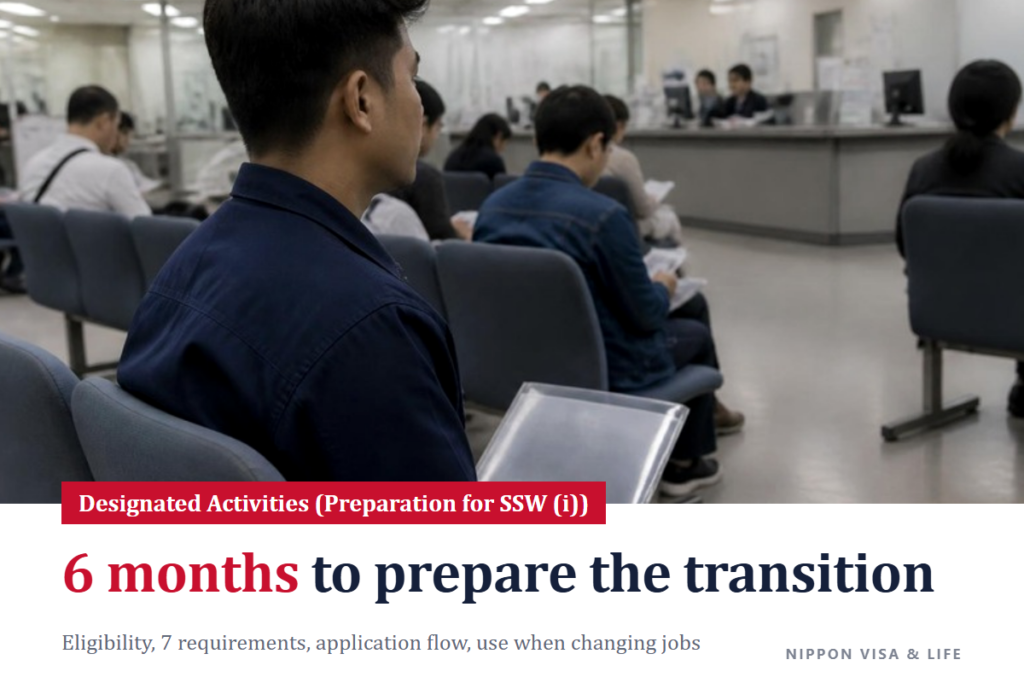
What Is Designated Activities (Preparation for Transition to Specified Skilled Worker (i)) in Japan? Eligibility, Requirements, Application Process, Use When Changing Jobs, and Points to Note
If your documents for Specified Skilled Worker (i) will not be ready before your period of stay expires in Japan, there is a Designated Activities status (6 months, work permitted) that lets you prepare while working at the company you plan to work for. Based on Immigration Services Agency materials, this article covers who can and cannot use it (passing the tests is a prerequisite, the 4 years and 6 months total limit, the food service industry), the 7 requirements, how to fill in the explanatory statement, the application process, how to use it when changing jobs, the one-time-only extension, and the fee (18,000 yen at the counter). -
My Number and the My Number Card in Japan: What Foreign Residents Should Know (When It Is Used, Applying, Extending the Expiration Date, and If You Lose It)
Foreign residents in Japan who have a resident record receive a 12-digit My Number. Based on information from the Immigration Services Agency, the Digital Agency, and the Ministry of Internal Affairs and Communications, this article explains when the number is used, how to apply for and receive a My Number Card, how to extend the card's expiration date after renewing your period of stay, and which phone numbers to call (with foreign-language support) if you lose the card. -
Where to Get Help With Shopping and Contract Problems in Japan: Consumer Hotline 188, Consumer Affairs Centers and Cooling-off
Something you bought online never arrived, you were pushed into a contract, or you were charged a lot of money. In such cases, call the Consumer Hotline "188" and you will be connected to a nearby Consumer Affairs Center. Based on information from the Consumer Affairs Agency and the National Consumer Affairs Center of Japan, this article explains how to call, the call charges, what you can consult about, and the period and method for cooling-off (a system for cancelling a contract). -
Rules for Alcohol and Tobacco in Japan: From Age 20, Penalties for Drunk Driving, and Where You Can Smoke
In Japan, alcohol and tobacco are allowed from age 20. Based on information from the law, the National Police Agency, the Ministry of Health, Labour and Welfare and the Immigration Services Agency, this article explains the penalties for drunk driving (after the July 2026 amendment), the penalties for people who lend a car, serve alcohol or ride along, the rule that indoor areas are in principle non-smoking, and littering. -
Getting Around in Japan: The Basics of Walking, Trains, Buses, Bicycles, Driving, and Traffic Accidents
The basics of getting around in Japan, organized by situation, based on the Immigration Services Agency's "Guidebook on Living and Working" and information from the National Police Agency. Covers the rules for walking on the street, how to ride trains and buses, the rules for bicycles and electric kick scooters, whether you can drive with a foreign driver's license, and what to do if you are in a traffic accident. -
Changing Jobs on Specified Skilled Worker Status in Japan: What the Worker, the New Company, and the Former Company Must Do, and in What Order
You can change jobs on Specified Skilled Worker status, but each time you change companies you need Permission to change status of residence, and you cannot work at the new company until permission is granted. This guide uses a table and a diagram to show what the worker, the new company (and its registered support organization), and the former company each do, and in what order. Based on Immigration Services Agency materials, it also explains how to check whether you can change jobs, when notifications are and are not required, and the Designated Activities options if you lose your job.