-

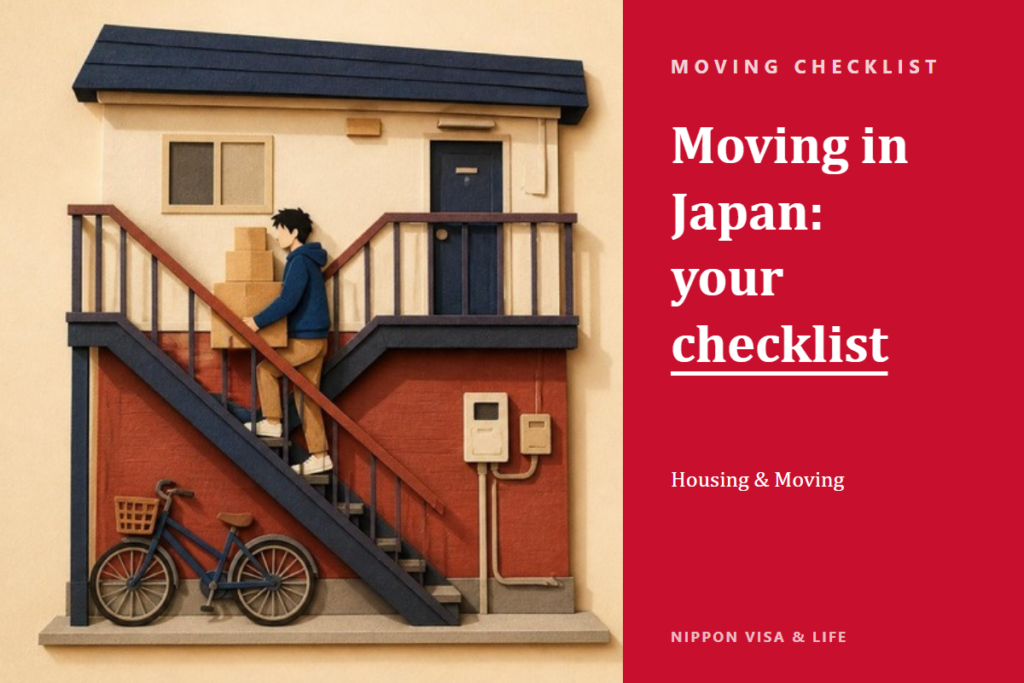
Checklist for Moving Within Japan: Moving-out and Moving-in Notifications, Residence Card, Electricity, Gas and Water, and Mail Forwarding
A checklist of the procedures you need when you move within Japan, divided into before and after the move. Based on information from the Ministry of Internal Affairs and Communications, the Immigration Services Agency, and Japan Post, this article explains the moving-out, moving-in and change-of-address notifications, the address on your residence card and My Number Card, electricity, gas and water, mail forwarding, banks, National Health Insurance, and more. -
[Breaking News] Japan’s OTAFF Warns Against Forging Test Result Notices: Forgery Leads to a 5-Year Ban from All Its Tests (October 13, 2026)
On October 13, 2026, OTAFF (外国人食品産業技能評価機構, an organization that evaluates the skills of foreign workers in the food industry) announced that forging a test result notice is a crime, and that anyone who forges test results will be banned from taking all OTAFF tests, in Japan and overseas, for 5 years. This article reports only the facts of the announcement. -
How to Use Hello Work: Looking for a Job in Japan as a Foreign Resident (What to Bring, Job Seeker Registration, Interpreters, and Referral Letters)
Hello Work is a government office where you can get job counseling and job referrals for free. Based on information from the Ministry of Health, Labour and Welfare and the Immigration Services Agency, this article explains what foreign residents should bring, the steps of job seeker registration, how to search for job openings, referral letters and interviews, and Hello Work offices with interpreters and Employment Service Centers for Foreigners. -
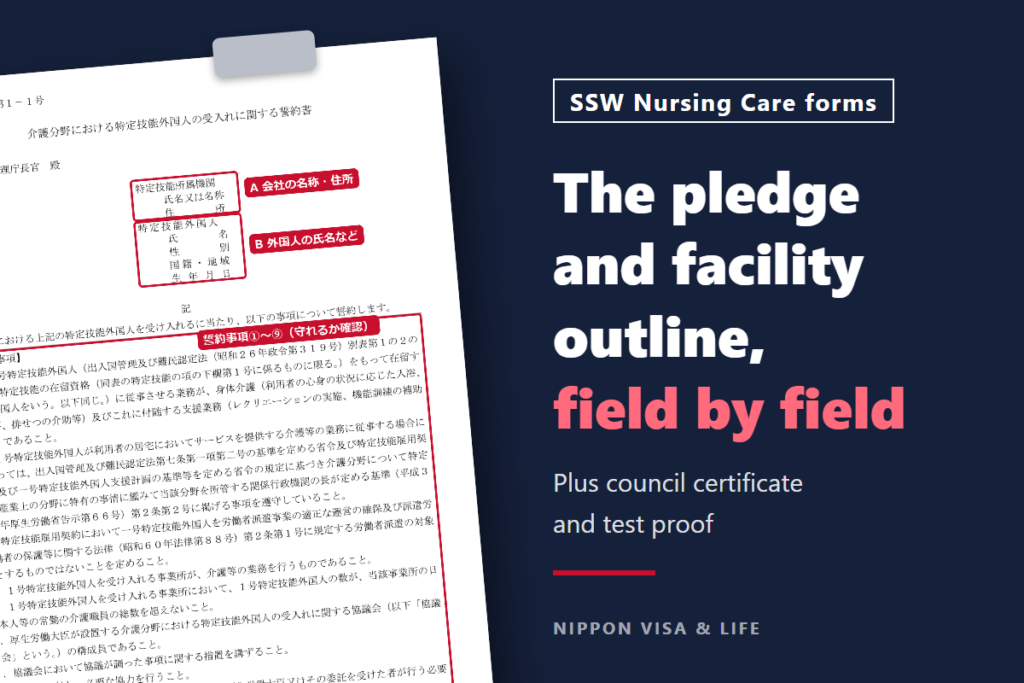
How to Fill Out the Written Pledge and Facility Outline for Specified Skilled Worker “Nursing Care” in Japan | Also the Council Certificate and Test Certificates
A field-by-field guide to the documents only for the nursing care field (Table 3) in Specified Skilled Worker "Nursing Care" applications. It covers the entry fields and nine pledges of the written pledge (Field Reference Form No. 1-1), how to count nursing care staff in the facility outline (No. 1-2), what to check before submitting the council certificate, the skills and Japanese-language proof for each background, the evaluation report, and the documents to submit when you cannot get one. -
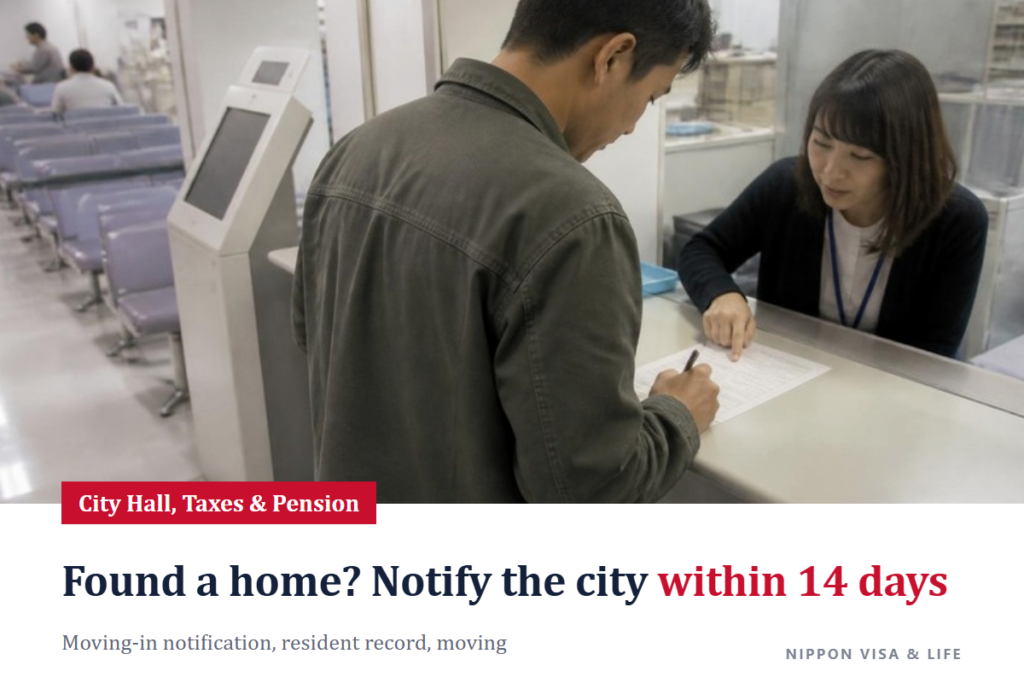
Moving-in Notification and Resident Record: Go to Your City Office Within 14 Days After Your Address in Japan Is Decided (What to Bring, Steps, and When You Move)
When you come to Japan and decide where to live, you must submit a moving-in notification (notification of your place of residence) at your city, ward, town or village office within 14 days. Based on information from the Ministry of Internal Affairs and Communications, the Immigration Services Agency, and the Basic Resident Registration Act, this article explains what to bring, the steps at the counter, the resident record and My Number, the moving-out notification and change-of-address notification when you move, and what happens if you are late. -
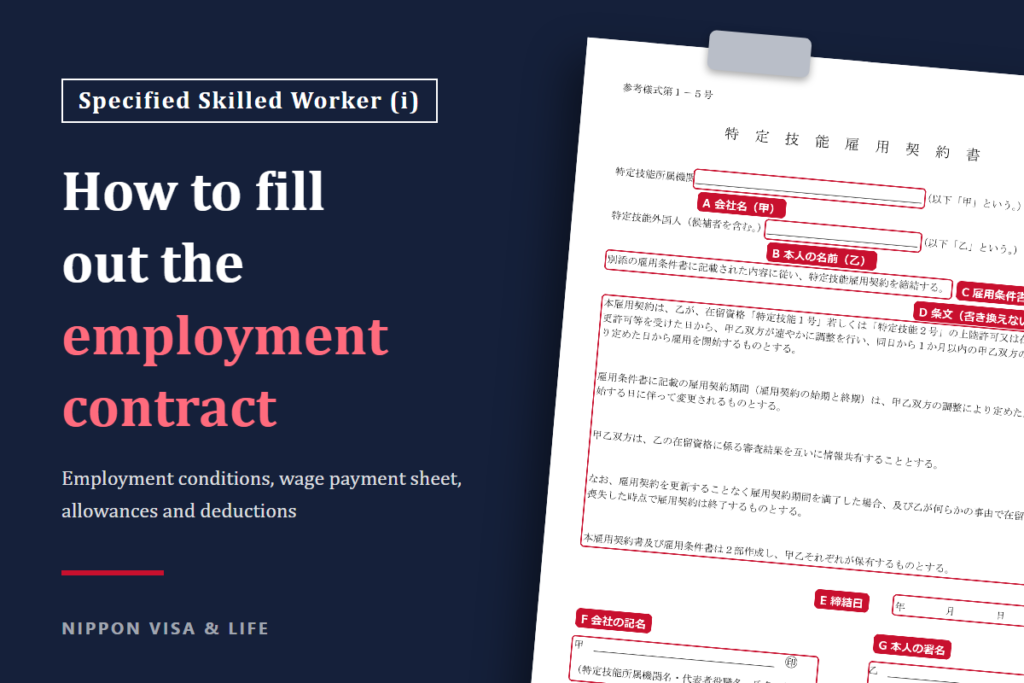
Employment Contract, Employment Conditions, and Wage Payment for Japan’s Specified Skilled Worker (i) | Filled-in Examples and Points to Note on Allowances and Deductions
How to fill out the Specified Skilled Worker employment contract (Reference Form No. 1-5), the employment conditions (No. 1-6), and the wage payment sheet (Attachment 1) submitted with a Specified Skilled Worker (i) application, following the Immigration Services Agency's forms and filled-in examples. Covers the worker's language and signature, points to note for each field of the employment conditions, how to write allowances, fixed overtime pay, and deductions (meals, housing, utilities), reviewing that the contents of the employment conditions and the wage payment sheet are consistent, and the fields that require a notification if changed later. -
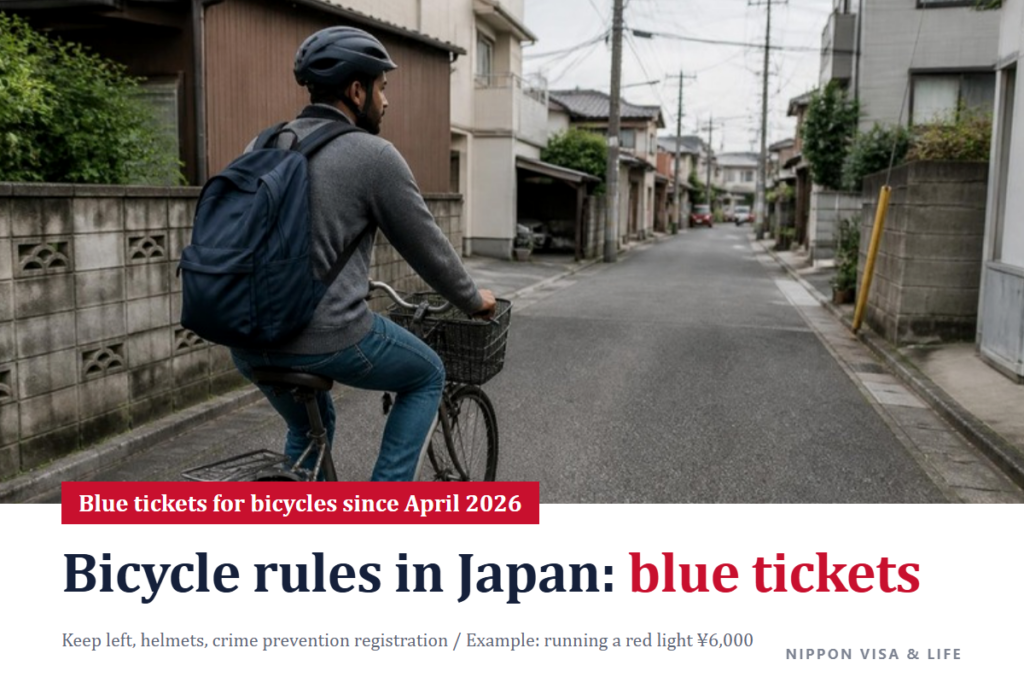
Rules for Riding a Bicycle in Japan: Keep Left, Helmets, Bicycle Crime Prevention Registration, and Blue Tickets (Fines)
A summary of the basic rules for riding a bicycle in Japan, based on information from the National Police Agency and the Immigration Services Agency's "Guidebook on Living and Working." Learn about keeping to the left side of the road, when you may ride on the sidewalk, lights at night, helmets, the ban on smartphones, umbrellas and earphones, the blue ticket system (fines) that started in April 2026, crime prevention registration, parking, insurance, and what to do in an accident. -
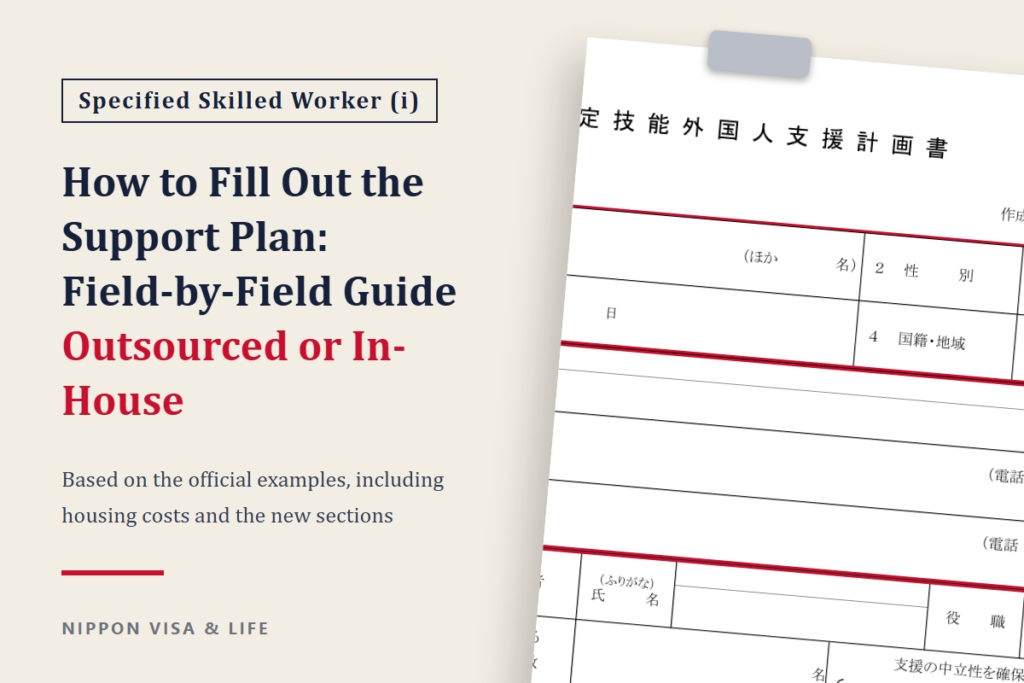
How to Fill Out the Support Plan for Japan’s Specified Skilled Worker (i) | Field-by-Field Guide Using the Official Examples for Full Outsourcing and In-House Support
How to fill out the Support Plan for Specified Skilled Worker (i) (Reference Form No. 1-17), explained field by field using the Immigration Services Agency's examples (full outsourcing and in-house support). Covers which fields differ between full outsourcing and in-house support, reasons for "No" and the outsourcing column, explaining housing costs, online interviews and the signature section, the coexistence measures section added in April 2025, and translation and the foreign national's signature. -
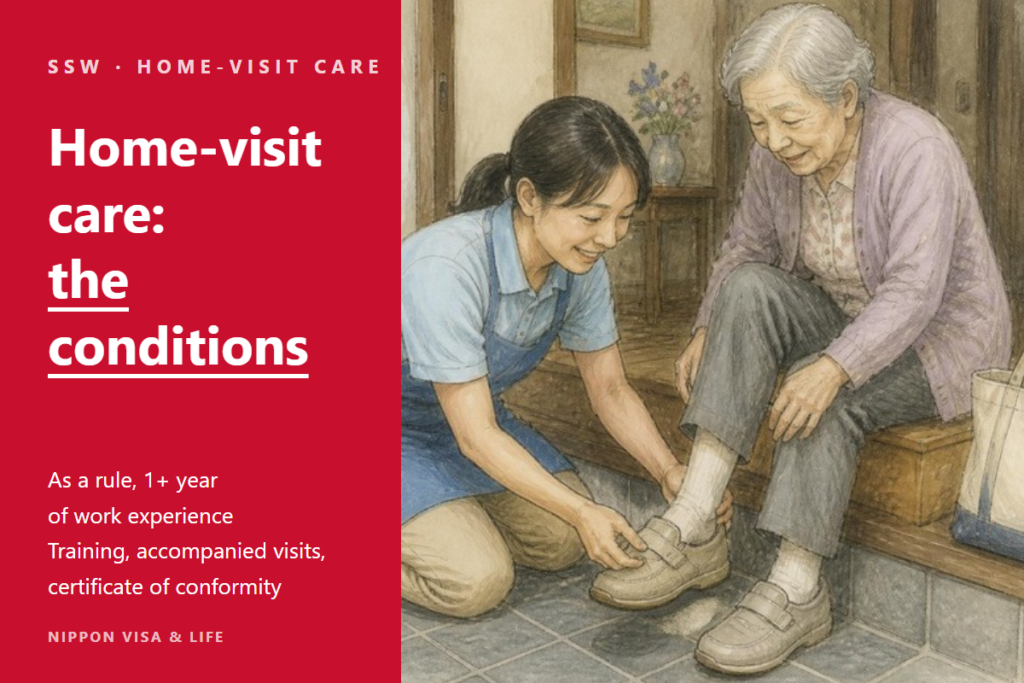
Conditions for Specified Skilled Workers to Work in Home-Visit Care in Japan | 1 Year of Experience, Training, Accompanied Visits, and the Certificate of Conformity
Since April 21, 2025, nursing care workers with Specified Skilled Worker (i) status can work in home-visit services such as home-visit care, under certain conditions. Following the notices and Q&A of the Ministry of Health, Labour and Welfare, this article explains, in the order of the steps: the worker's conditions (completing the initial training course for care workers or similar, and in principle at least 1 year of work experience), the exception for less than 1 year of experience and the length of accompanied visits, the 5 things the facility must observe, explanations to users and families, applying for a certificate of conformity for each foreign national and the documents, periodic reports and itinerant visits, and the procedures for transferring a worker from a facility. -
What to Do When an Earthquake Hits in Japan: During the Shaking, After the Shaking Stops, and Everyday Preparation
A summary of how to protect yourself when an earthquake occurs in Japan, based on the Immigration Services Agency's "Guidebook on Living and Working" and information from the Japan Meteorological Agency. Learn what to do if the shaking starts while you are at home, outside, or in a car, what to do after the shaking stops, Earthquake Early Warnings, seismic intensity, contacting your family (Disaster Emergency Message Dial 171), and everyday preparation.