NIPPON VISA & LIFE 編集部– Author –
-

[Breaking News] Japan Building Maintenance Association Announces Schedule for the Building Cleaning Specified Skilled Worker (ii) Test on December 18 (October 20, 2026)
On October 20, 2026, the Japan Building Maintenance Association announced the schedule for the building cleaning Specified Skilled Worker (ii) evaluation test to be held in Japan on December 18, 2026. Online applications run from October 27 to November 10, and application documents must arrive by November 24. This article reports only the facts of the announcement. -
When You Cannot Pay National Pension Premiums in Japan: How to Apply for Exemption or Payment Postponement (Income Criteria, Where to Apply, What to Bring, Making Up Payments Later)
If it is difficult for you to pay National Pension premiums in Japan (17,920 yen per month for fiscal year Reiwa 8), you can use the premium exemption system and the payment postponement system. Based on information from the Japan Pension Service, this article explains the income criteria, where to apply and what to bring, how far back you can apply, the special rule when you leave your job, the rules for students, and making up payments later (tsuno). -
Unemployment Benefits in Japan After Leaving Your Job: Separation Notice, Hello Work Procedures, Conditions and How Long You Can Receive Them
Learn about the basic allowance of employment insurance (unemployment benefits) you may receive after leaving a company in Japan: the conditions, how to get your separation notice, the steps and what to bring for the procedures at Hello Work, when payments start, and how many days you can receive them, based on information from Hello Work and the Immigration Services Agency's "Guidebook on Living and Working". -
How to Rent an Apartment and Move in Japan: Finding a Home, Contracts, Move-in Costs, Moving In, House Rules and Moving Out
This article explains, step by step, how to rent an apartment in Japan, from finding a home to signing the contract, moving in, the rules while you live there, and moving out. Based on the Immigration Services Agency's "Guidebook on Living and Working" and the Ministry of Land, Infrastructure, Transport and Tourism's "Apartment Search Guidebook", it covers move-in costs such as the security deposit, key money, brokerage fee and guarantee company, the documents needed for the tenant screening, applying for electricity, gas and water, giving notice to cancel, public housing and UR rental housing, and information available in foreign languages. -
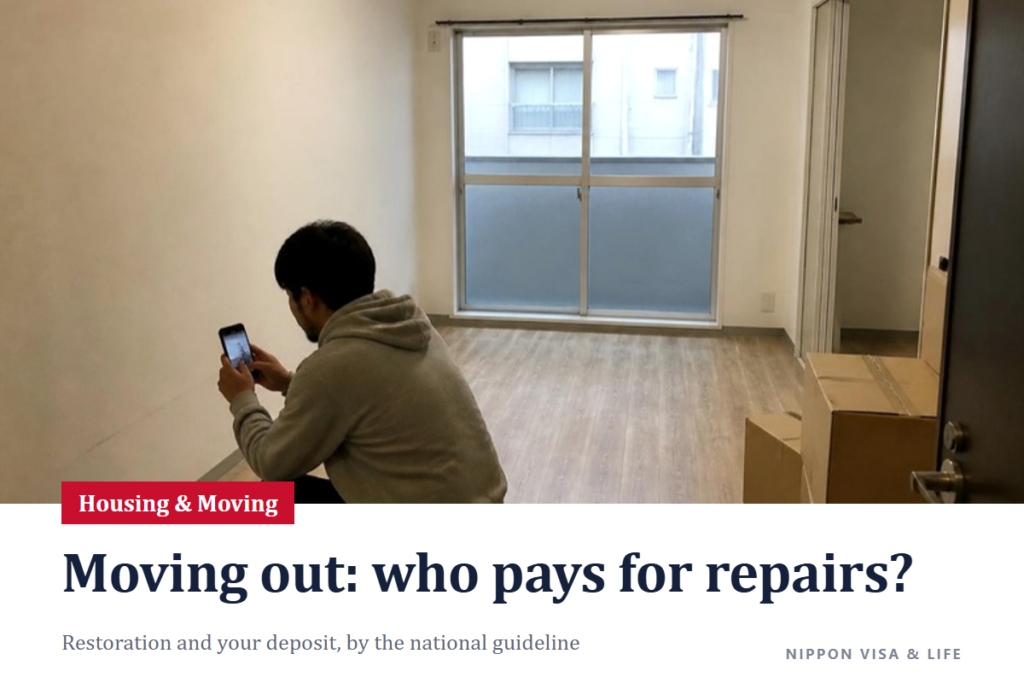
Restoration and Security Deposits When Moving Out of a Rental Home in Japan: Who Pays for Repairs? Examples from the National Government’s Guidelines
When you move out of an apartment in Japan, who pays for repairs? Based on the Ministry of Land, Infrastructure, Transport and Tourism's "Guidelines on Troubles Concerning Restoration to Original Condition" and the Civil Code, this article explains general examples of costs paid by the tenant and costs paid by the landlord, how the security deposit is returned, what to do when moving in and moving out, and where to get advice if you do not agree. -
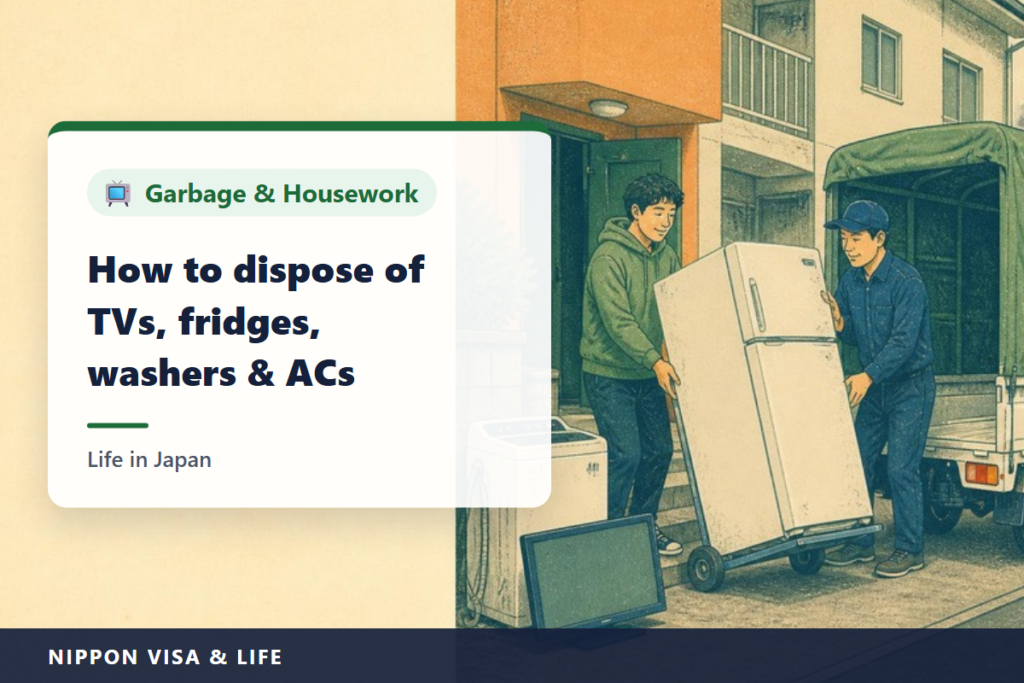
How to Throw Away a TV, Refrigerator, Washing Machine or Air Conditioner in Japan: Disposal Methods and Fees for the 4 Items Covered by the Home Appliance Recycling Act
In Japan, TVs, refrigerators, washing machines and air conditioners (the 4 types of home appliances) are thrown away in a set way that is different from regular garbage. Based on information from the Ministry of Economy, Trade and Industry, the Ministry of the Environment and local governments, this article explains how to ask the store where you bought the product or the store where you buy a new one, what to do if you do not know the store, how to pay the fee at a post office and carry the item yourself, the fees, and why you should be careful with "free collection." -
How to Enroll Your Foreign National Child in Elementary or Junior High School in Japan: Procedures, What to Bring and Costs at Public Schools
How to enroll a child of foreign nationality in a public elementary or junior high school in Japan: the steps (moving-in notification, board of education, enrollment permit, school), what to bring, how the grade is decided, tuition, textbooks and school lunch costs, school attendance assistance, and procedures when you move or return home, based on information from the Ministry of Education, Culture, Sports, Science and Technology and the Immigration Services Agency. -
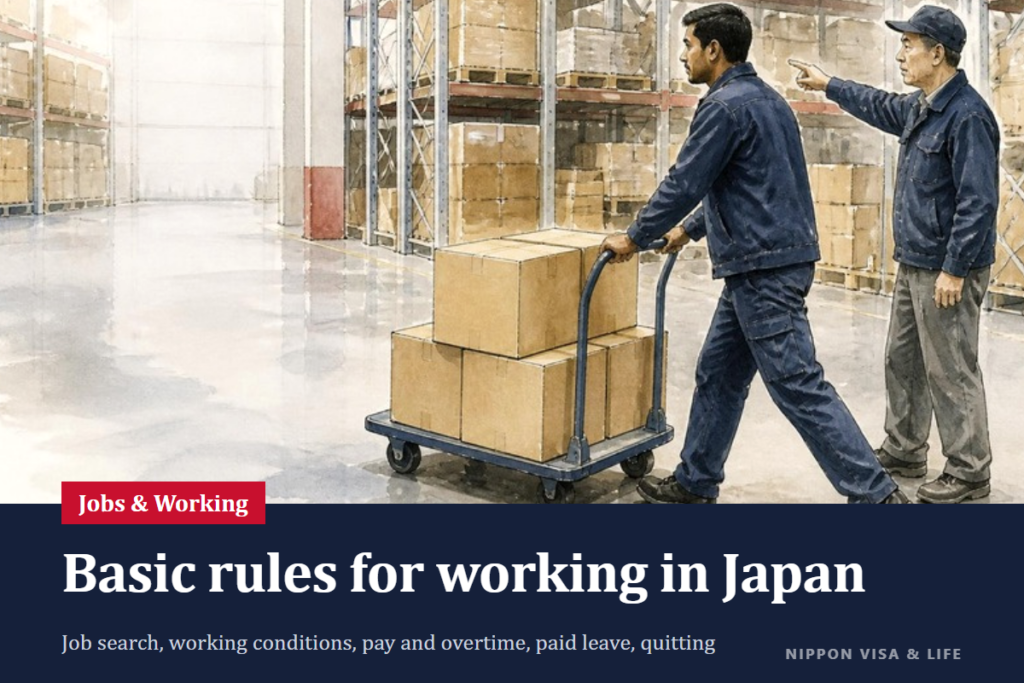
The Basics of Finding a Job and Working in Japan: Hello Work, Working Conditions, Wages and Overtime, Paid Leave, Quitting and Where to Get Help
The basics of finding a job and working that foreign residents working in Japan should know, organized by situation. Based on the Immigration Services Agency's "Guidebook on Living and Working" and information from the Ministry of Health, Labour and Welfare, this article explains how to look for a job at Hello Work, the working conditions to check before you start, how wages are paid, working hours and overtime pay, paid leave, social insurance, the rules for quitting, and consultation services available in foreign languages. -
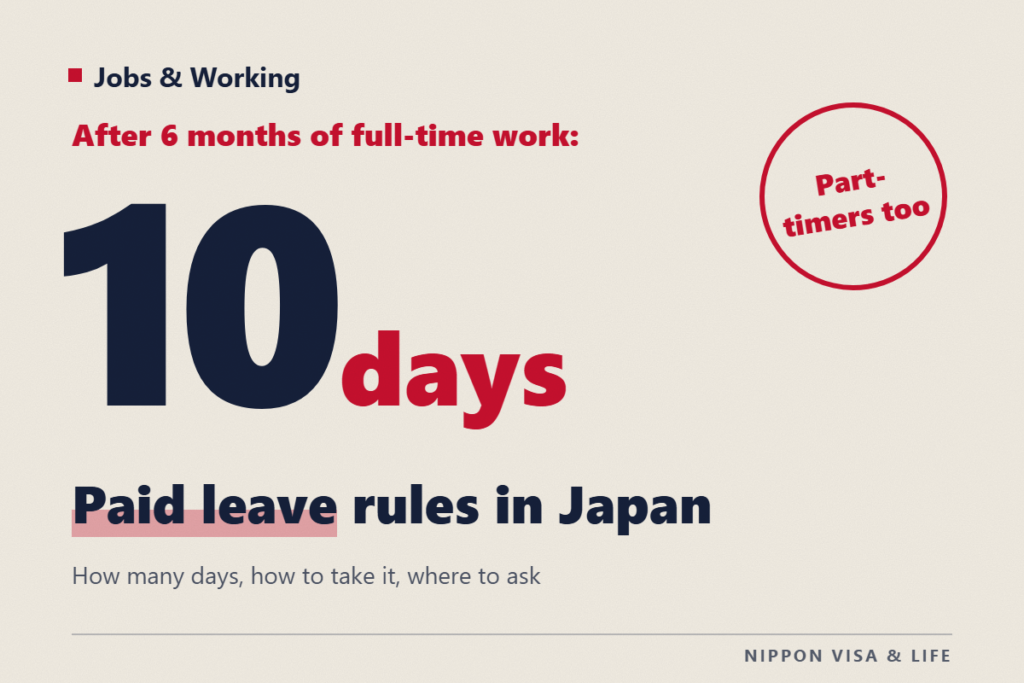
Paid Annual Leave Rules in Japan: How Many Days Do You Get? Can Part-Time Workers Take It Too?
Learn about annual paid leave (yukyu) for people working in Japan: how many days you get, the number of days for part-time workers, how to take days off, the rule that leave expires after 2 years, and where to get help (telephone consultation in foreign languages) if your company says "we have no paid leave", based on information from the Ministry of Health, Labour and Welfare and the Immigration Services Agency's "Guidebook on Living and Working". -
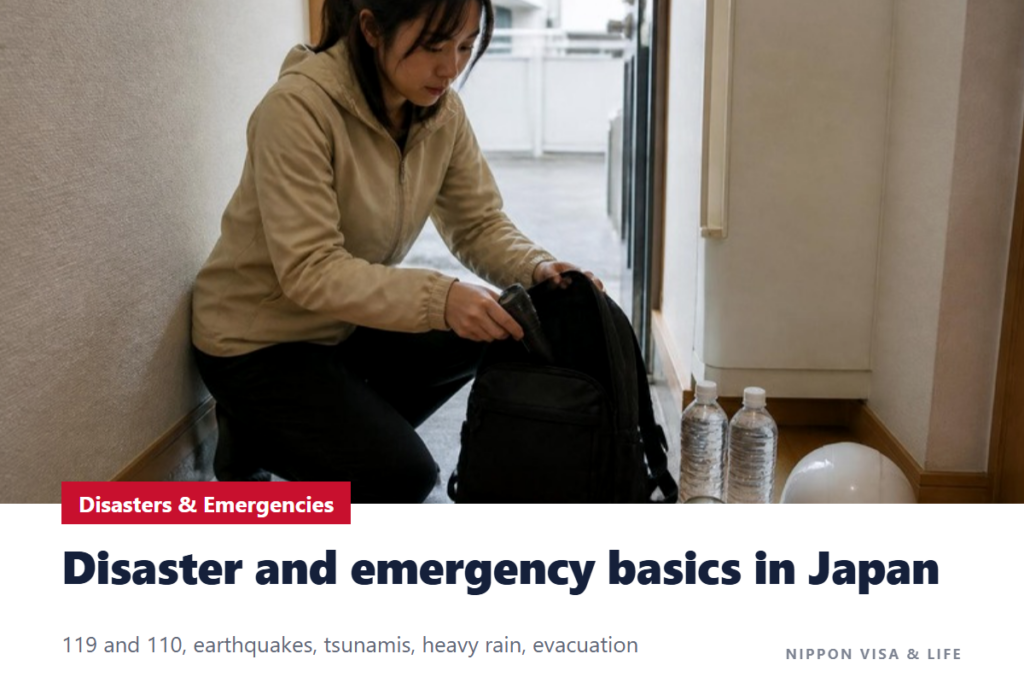
Disasters and Emergencies in Japan: The Basics | Calling 119 and 110, Earthquakes, Tsunami, Heavy Rain, Volcanoes, Evacuation and Multilingual Information
For foreign residents living in Japan, a summary by situation of what to do in emergencies and disasters, based on the Immigration Services Agency's "Guidebook on Living and Working" and other sources: the phone numbers to call for a sudden illness, fire or accident (119 and 110), what to do in earthquakes, tsunami, heavy rain or typhoons, and volcanic eruptions, alert levels and how to evacuate, contacting your family (Disaster Emergency Message Dial 171), and how to receive disaster information in foreign languages.