
Disasters & Emergencies– category –
-

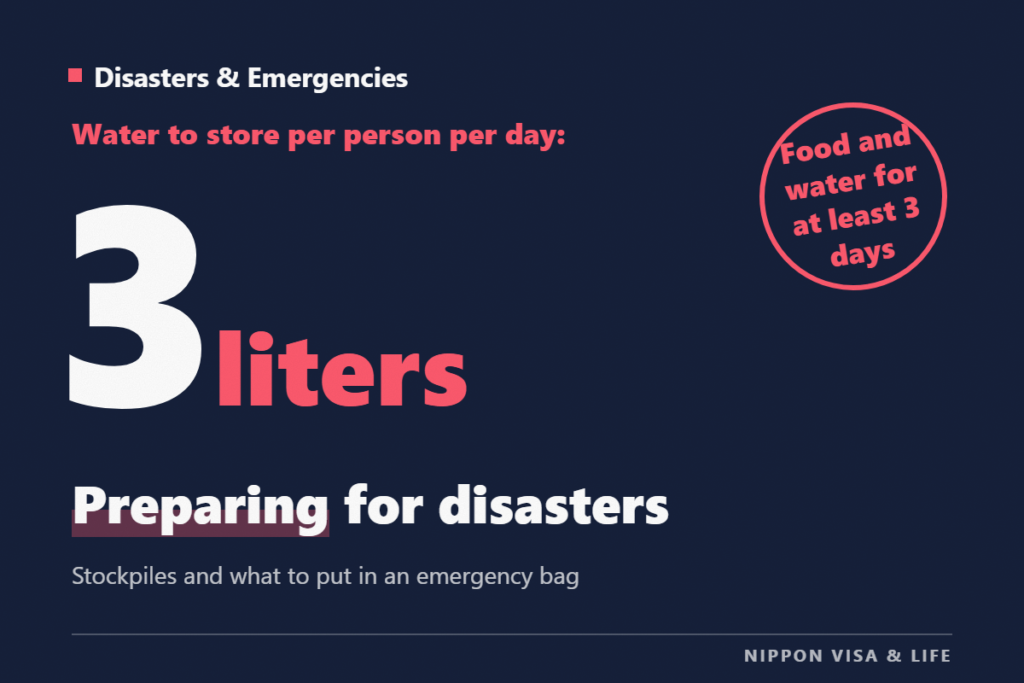
Preparing for Disasters in Japan: Stockpiling Food and Water (3 Days to 1 Week) and What to Put in an Emergency Grab Bag
Based on national government materials, this article explains how to prepare for disasters such as earthquakes and typhoons in Japan: how much food and water to keep at home (3 liters of water per person per day, for 3 days to 1 week), rolling stock (preparing with the food you normally eat), toilet supplies, what to put in an emergency grab bag, and how to contact your family (Disaster Emergency Message Dial 171). -
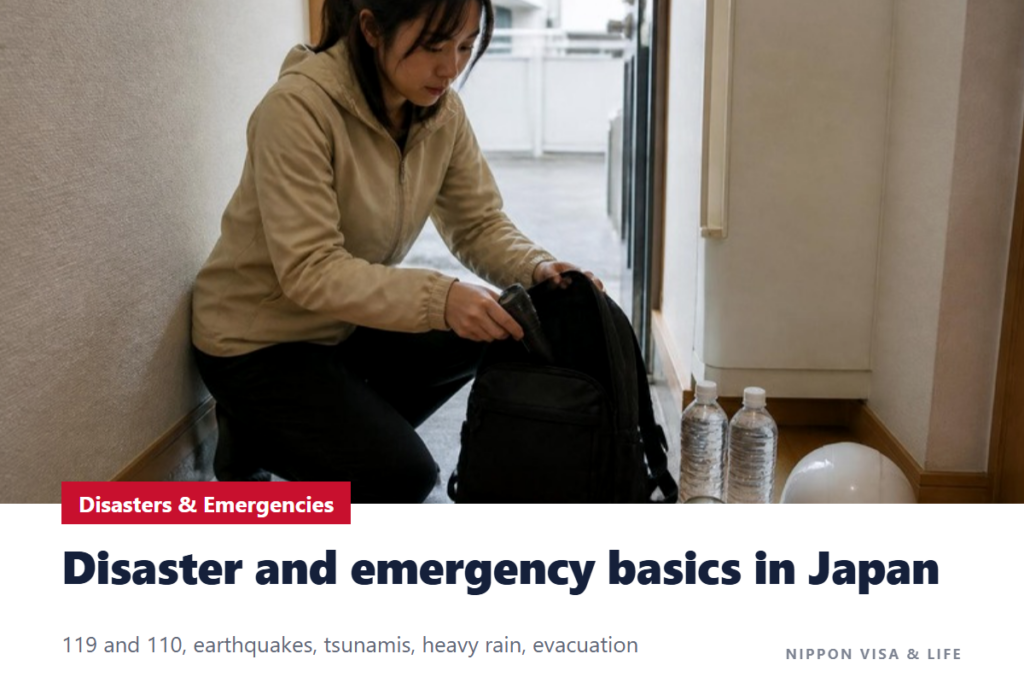
Disasters and Emergencies in Japan: The Basics | Calling 119 and 110, Earthquakes, Tsunami, Heavy Rain, Volcanoes, Evacuation and Multilingual Information
For foreign residents living in Japan, a summary by situation of what to do in emergencies and disasters, based on the Immigration Services Agency's "Guidebook on Living and Working" and other sources: the phone numbers to call for a sudden illness, fire or accident (119 and 110), what to do in earthquakes, tsunami, heavy rain or typhoons, and volcanic eruptions, alert levels and how to evacuate, contacting your family (Disaster Emergency Message Dial 171), and how to receive disaster information in foreign languages. -
How to Find Evacuation Sites, Evacuation Shelters and Hazard Maps in Japan: What to Check for Your Address Before a Disaster
Learn the difference between the places you escape to when a disaster strikes in Japan (Designated Emergency Evacuation Sites and Designated Evacuation Shelters), and how to check the risks and evacuation sites for your own address using the Ministry of Land, Infrastructure, Transport and Tourism's "Hazard Map Portal Site" and the hazard maps of your city, ward, town or village, based on the Immigration Services Agency's "Guidebook on Living and Working" and information from the Geospatial Information Authority of Japan. -
What to Do When an Earthquake Hits in Japan: During the Shaking, After the Shaking Stops, and Everyday Preparation
A summary of how to protect yourself when an earthquake occurs in Japan, based on the Immigration Services Agency's "Guidebook on Living and Working" and information from the Japan Meteorological Agency. Learn what to do if the shaking starts while you are at home, outside, or in a car, what to do after the shaking stops, Earthquake Early Warnings, seismic intensity, contacting your family (Disaster Emergency Message Dial 171), and everyday preparation.
1